

A few years ago, I noticed something odd happening every morning.
Getting out of bed wasn’t difficult, but it definitely wasn’t smooth anymore.
My ankles felt stiff for the first few steps. My hips needed a minute to loosen up. Even reaching for something on a high shelf felt a little more awkward than it used to.
At first, I blamed age.
Then I blamed sitting too much.
The truth was somewhere in the middle.
I wasn’t losing strength. I was losing mobility.
There’s a difference.
Strength is your ability to move something.
Mobility is your ability to move yourself comfortably and freely.
Once I understood that, everything changed.
Instead of focusing only on exercise, I started paying attention to how my joints moved throughout the day. The result was a simple daily mobility routine that made everyday activities feel easier.
If you’re over 50 and feeling a little stiffer than you used to, establishing a dedicated mobility exercises for adults over 50 routine may help you too.
What Is Mobility and Why Does It Matter?
Many people confuse mobility with flexibility.
They’re related, but they’re not the same thing.
Flexibility refers to how far a muscle can stretch.
Mobility is how well a joint moves through its natural range of motion.
Good mobility helps with:
- Walking comfortably
- Climbing stairs
- Reaching overhead
- Getting in and out of chairs
- Maintaining balance
- Reducing stiffness
The goal isn’t to become a gymnast.
The goal is to move through everyday life with less effort and discomfort.
Walking comfortably Climbing stairs Reaching overhead Getting in and out of chairs Maintaining balance Reducing stiffness
The goal isn’t to become a gymnast. The goal is to move through everyday life with less effort and discomfort.
The Mistake I Made at First
.When I started working on mobility, I treated it like a workout.
I pushed stretches too hard and held positions longer than necessary.
That wasn’t helpful.
Mobility isn’t about forcing movement.
It’s about encouraging movement.
Once I started using slow, controlled motions instead of aggressive stretching, my joints responded much better.
Why a Daily Routine Works Better Than Occasional Sessions
One of the biggest lessons I learned was that mobility improves through frequency.
Ten minutes every day often works better than an hour once a week.
Think about it.
Your joints move every day.
Giving them regular movement helps keep them functioning smoothly.
That’s why I built a simple routine I could realistically stick with.
A Simple Daily Mobility Routine
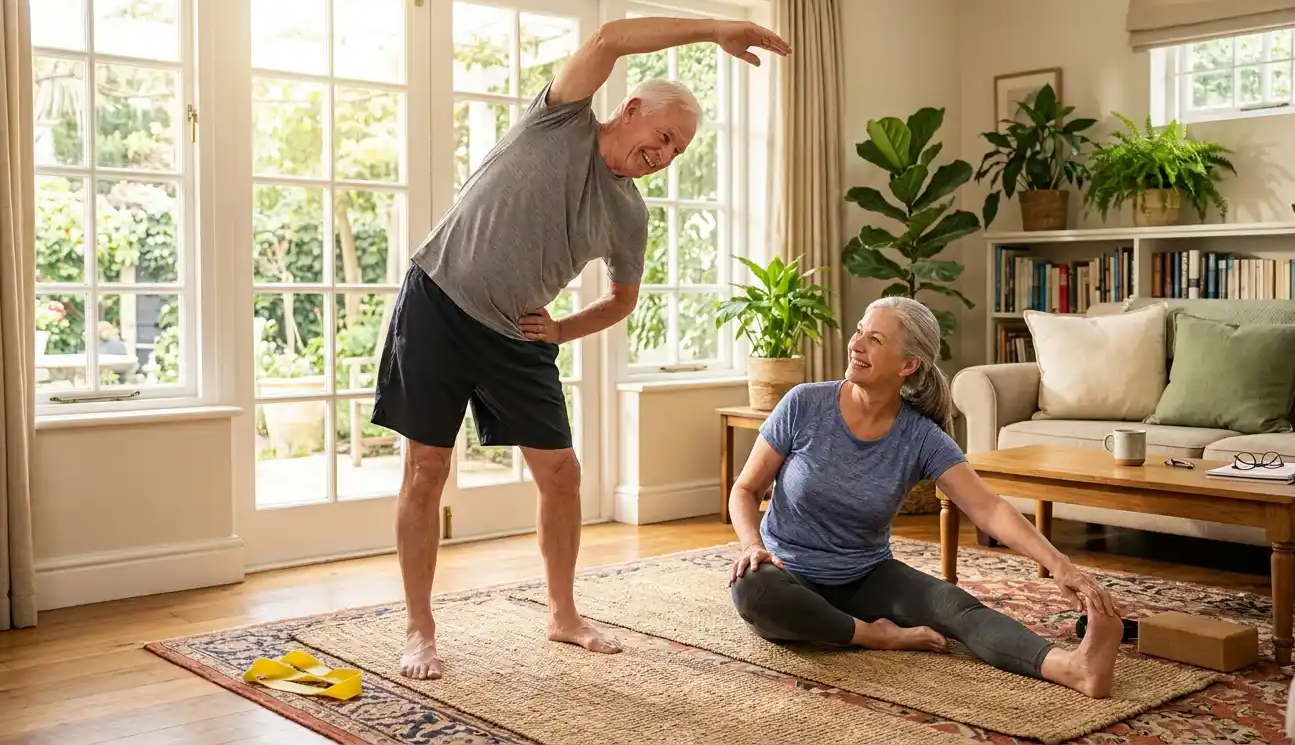
This routine takes around 10–15 minutes. You don’t need special equipment. Just a comfortable space and a little consistency.
1. Neck Rotations
We spend a lot of time looking at phones, computers, and televisions.
The neck often becomes stiff without us realizing it.
How to do it:
- Sit or stand comfortably.
- Turn your head slowly to the right.
- Return to center.
- Turn left.
- Repeat 5–10 times.
Move gently and avoid forcing the motion.
2. Shoulder Rolls
This exercise immediately helps reduce upper-body tension.
Steps:
- Lift shoulders upward.
- Roll them backward.
- Lower them down.
- Repeat forward and backward.
Perform 10 repetitions in each direction.
3. Arm Circles
Arm circles improve shoulder mobility and circulation.
Steps:
- Extend arms out to the sides.
- Make small circles.
- Gradually increase the size.
Continue for 30 seconds, then reverse direction.
4. Seated Torso Twists
This movement helps maintain spinal mobility.
Steps:
- Sit upright in a chair.
- Slowly rotate to one side.
- Return to center.
- Rotate to the opposite side.
Repeat 10 times per side.
5. Hip Marches
Hip mobility plays a major role in walking and balance.
Steps:
- Sit comfortably.
- Lift one knee.
- Lower it.
- Alternate sides.
Continue for one minute.
This simple movement became one of my favorites because it loosens the hips quickly.
If you want to dive deeper into opening up this specific area, you can incorporate targeted gentle hip mobility exercises for seniors over 50 to enhance your range of motion.
6. Ankle Circles
Ankles are often overlooked until they become stiff.
Steps:
- Lift one foot slightly.
- Rotate your ankle slowly.
- Complete several circles.
- Reverse direction.
Repeat on the other side.
7. Heel and Toe Raises
These improve ankle mobility and lower-leg function.
Steps:
- Raise your heels.
- Lower them.
- Lift your toes.
- Lower them.
Perform 10–15 repetitions.
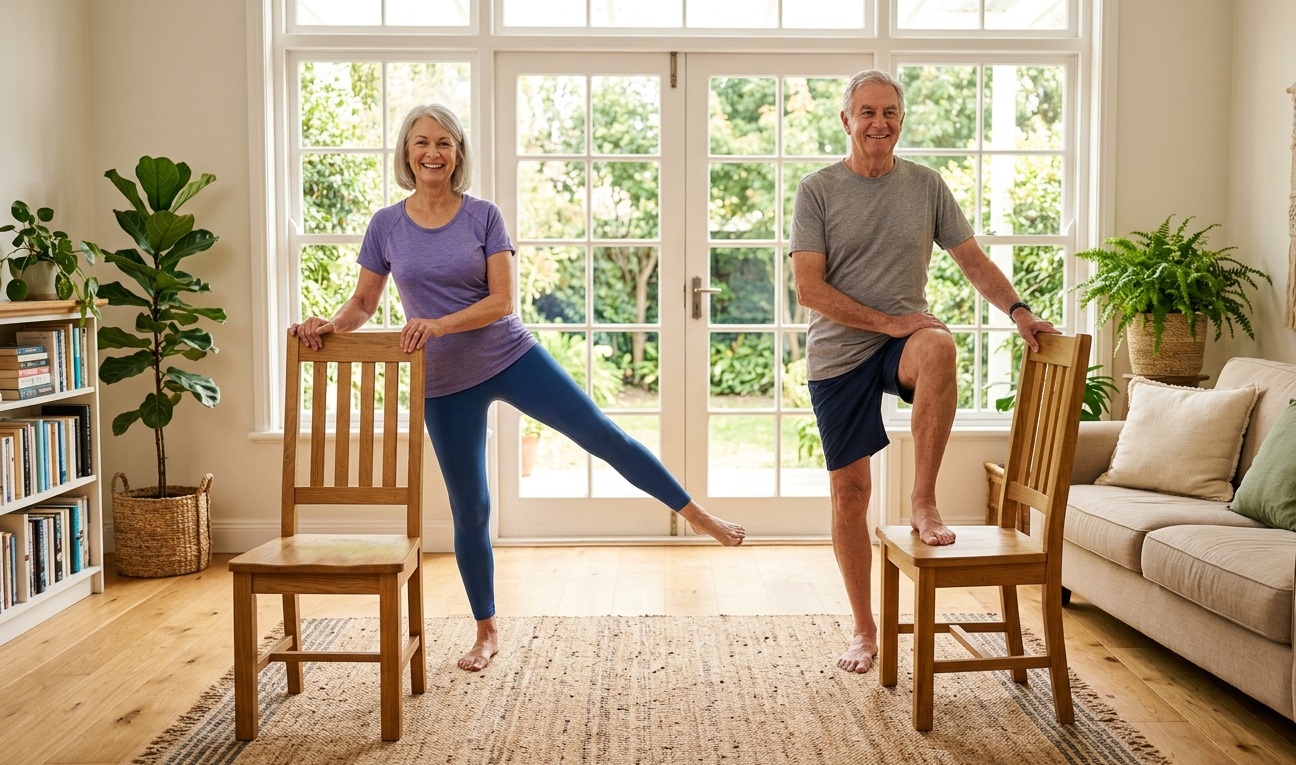
8. Standing Side Leg Swings
Hold a chair for support.
Steps:
- Swing one leg gently side to side.
- Keep movements controlled.
- Switch legs.
This helps improve hip mobility and balance simultaneously.
9. Sit-to-Stand Exercise
This exercise combines mobility with strength.
Steps:
- Sit in a sturdy chair.
- Stand up slowly.
- Sit down with control.
Repeat 8–10 times.
I noticed this movement made daily activities feel easier surprisingly quickly.
10. Gentle Calf Stretch
Finish with a simple calf stretch.
Steps:
- Stand facing a wall.
- Place one foot behind you.
- Keep the heel down.
- Lean forward slightly.
Hold for 20–30 seconds.
Switch sides.
How I Fit Mobility Into Daily Life
One reason this routine worked is that I stopped treating it like a separate fitness program.
Instead, I attached it to habits I already had.
For example:
- Neck rotations while waiting for coffee
- Shoulder rolls after sitting at my desk
- Ankle circles while watching television
- Hip marches during work breaks
If you want a more structured way to kickstart your day before getting to your desk, following a morning mobility routine for adults over 50 can set a wonderful tone for the hours ahead.
Small moments add up.
Tools That Helped Me Stay Consistent
You don’t need much, but a few tools were helpful.
Phone Timer
A simple timer kept sessions focused.
Google Fit or Apple Health
Tracking movement helped me stay accountable.
Resistance Bands
Occasionally I used bands to add gentle resistance.
Yoga Mat
Not required, but it made some exercises more comfortable.
Common Mistakes to Avoid
Moving Too Fast
Mobility improves through controlled movement.
Rushing reduces the benefit.
Skipping Days
Consistency matters more than intensity.
Forcing Stretch Positions
Mobility should feel comfortable, not painful.
Ignoring Smaller Joints
Ankles, wrists, and shoulders deserve attention too.
What Changes Can You Expect?
Mobility improvements tend to appear gradually.
Most people notice:
- Less stiffness in the morning
- Easier walking
- Better posture
- Improved balance
- More comfortable movement throughout the day
For me, the biggest difference was how natural everyday movement started to feel again.
I wasn’t thinking about my joints all the time because they weren’t demanding attention anymore. . Once your legs feel less stiff, you can smoothly transition into a regular walking program for beginners over 50 a simple 4-week plan to steadily build up your endurance.
Final Thoughts
Mobility doesn’t require a gym membership or complicated routines.
A few minutes of intentional movement each day can help your body stay comfortable, capable, and active.
The key is consistency.
Start with a few exercises from this routine. Practice them regularly and pay attention to how your body responds.
You may be surprised how much difference a simple daily mobility habit can make over time.