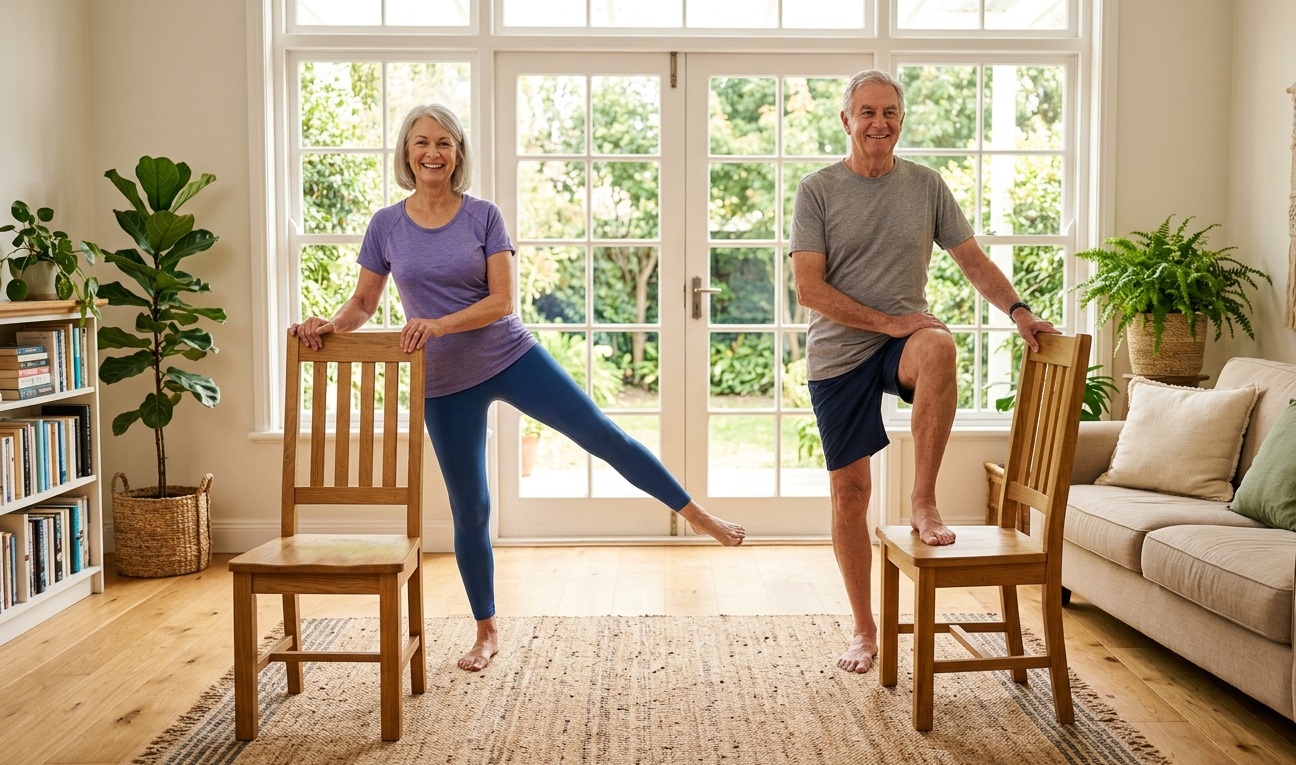

A few years ago, my mornings started feeling different.
Not in a dramatic way. I wasn’t waking up in pain or dealing with a major injury. It was more like my body needed a few extra minutes to “boot up.”
I’d swing my legs out of bed, stand up, and immediately notice tight ankles. My hips felt stiff. My lower back seemed to need a gentle reminder that it was time to start moving.
For a while, I assumed this was simply part of getting older.
Then I noticed something interesting.
On days when I moved around more in the morning, I felt better for the rest of the day. On days when I sat down with coffee and barely moved for an hour, the stiffness seemed to linger.
That realization led me to create a simple morning mobility routine.
Nothing complicated. No gym equipment. No intense stretching sessions.
Just a few minutes of intentional movement that helped my body feel awake and ready for the day.
If you’re over 50 and mornings feel a little stiffer than they used to, starting with a structured morning mobility routine for adults over 50 may help you start the day feeling more comfortable.
Why Morning Mobility Matters
When we sleep, our bodies spend hours in relatively fixed positions.
Even after a good night’s rest, joints and muscles can feel less mobile when we first wake up.
That doesn’t mean something is wrong.
It’s simply a reminder that the body often needs movement before it feels its best.
A short mobility routine can help:
- Reduce morning stiffness
- Improve joint movement
- Increase circulation
- Support better posture
- Make walking feel easier
- Prepare the body for daily activities
The goal isn’t to work up a sweat.
The goal is to move well.
The goal isn’t to work up a sweat. The goal is to move well.
To ensure you are addressing your body’s needs broadly, incorporating general mobility exercises for adults over 50 into your week can unlock even better daily freedom.
The Mistake I Made in the Beginning
When I first started doing morning mobility exercises, I treated them like a workout. I stretched too aggressively.
I tried to force flexibility that wasn’t there yet. Instead of feeling better, I often felt uncomfortable.
Eventually, I learned something important: Morning mobility should feel gentle. You’re not trying to push your body.
You’re simply helping it wake up. Once I adopted that mindset, the routine became much more enjoyable.
Before You Start
You don’t need special equipment.
All you need is:
Comfortable clothing A sturdy chair (optional) A small amount of floor space Five to ten minutes
All you need is:
- Comfortable clothing
- A sturdy chair (optional)
- A small amount of floor space
- Five to ten minutes
Step 1: Gentle Neck Turns
This is always where I begin.
Many of us spend hours looking at phones, tablets, and screens.
The neck often becomes tight without us realizing it.
How to do it:
- Sit or stand comfortably.
- Slowly turn your head to the right.
- Return to center.
- Turn to the left.
- Repeat 5–10 times.
Keep the movement relaxed.
No forcing.
Step 2: Shoulder Rolls
A surprising amount of tension builds up around the shoulders.
How to do it:
- Lift your shoulders toward your ears.
- Roll them backward.
- Lower them slowly.
- Repeat 10 times.
- Reverse direction.
I often notice immediate relief from this simple exercise.
Step 3: Arm Circles
This helps loosen the shoulders and upper back.
Steps:
- Extend your arms out to the sides.
- Make small circles.
- Gradually increase the size.
- Continue for 30 seconds.
- Reverse direction.
The movement should feel smooth and controlled.
Step 4: Seated Torso Twists
This is one of my favorite morning exercises.
How to do it:
- Sit upright in a chair.
- Place your hands on your thighs.
- Rotate gently to one side.
- Return to center.
- Rotate to the other side.
Repeat 10 times per side.
This movement helps wake up the spine.
Step 5: Hip Marches
The hips tend to become stiff after long periods of sitting or sleeping.
Steps:
- Sit comfortably.
- Lift one knee.
- Lower it slowly.
- Lift the other knee.
Continue for one minute.
It feels simple, but targeting this area with dedicated gentle hip mobility exercises for seniors over 50 can make a noticeable difference in how your entire lower body moves.
Step 6: Ankle Circles
Healthy ankles contribute to better walking and balance.
Steps:
- Lift one foot slightly.
- Rotate the ankle slowly.
- Complete several circles.
- Reverse direction.
- Repeat on the other foot.
I started doing these while drinking my morning coffee.
Step 7: Heel and Toe Raises
This exercise wakes up the lower legs.
How to do it:
- Raise your heels.
- Lower them slowly.
- Lift your toes.
- Lower them.
Perform 10–15 repetitions.
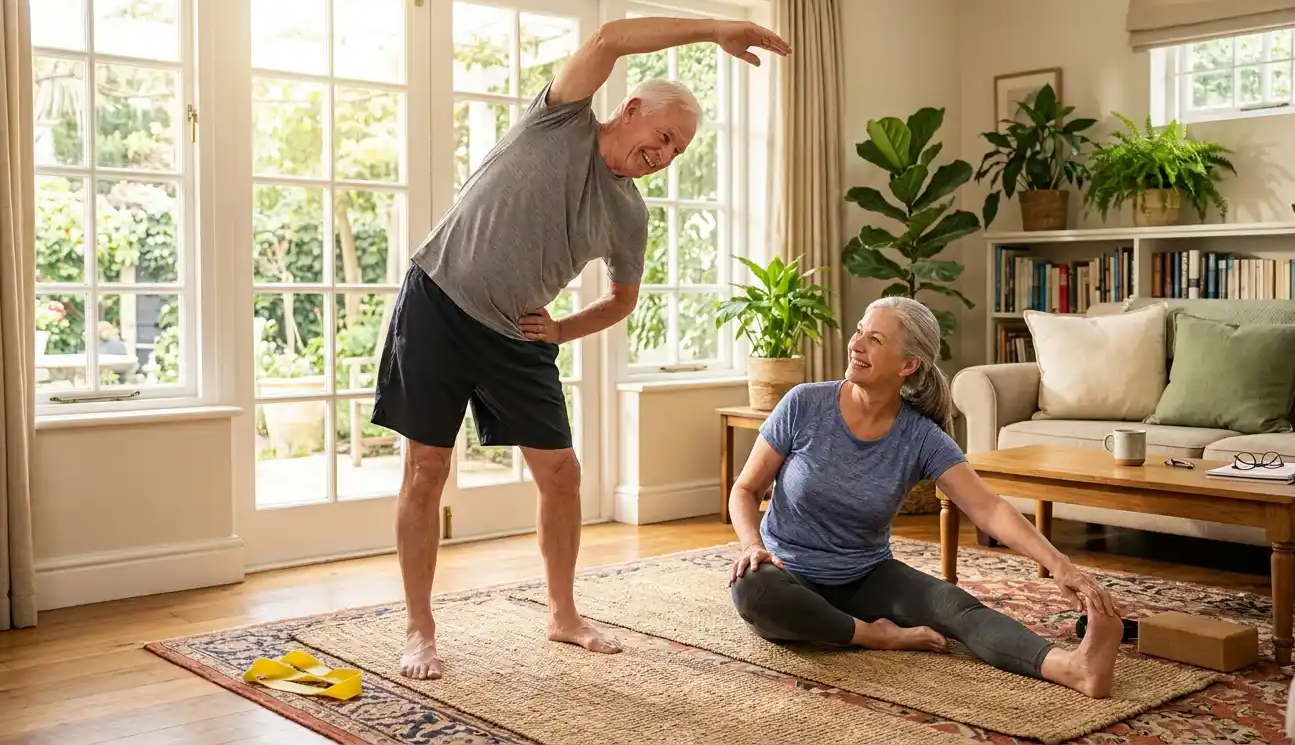
Step 8: Standing Side Reaches
This movement helps loosen the sides of the body.
Steps:
- Stand comfortably.
- Raise one arm overhead.
- Reach gently to the opposite side.
- Return to center.
- Repeat on the other side.
Move slowly and breathe naturally
Step 9: Sit-to-Stand
This exercise combines mobility and strength.
Steps:
- Sit in a sturdy chair.
- Stand up slowly.
- Sit down with control.
Repeat 8–10 times.
This movement directly supports everyday activities.
Step 10: Easy Walking
Finish with one or two minutes of walking around the room or house.
This helps connect all the previous movements and gets the body ready for the day.
It may sound too simple, but it works
My Typical 10-Minute Morning Routine Here’s the sequence I usually follow, which is a great alternative to a structured chair exercises for beginners over 50 10-min routine:
Minute 1
Neck turns
Minute 2
Shoulder rolls
Minute 3
Arm circles
Minute 4
Torso twists
Minute 5
Hip marches
Minute 6
Ankle circles
Minute 7
Heel and toe raises
Minute 8
Side reaches
Minute 9
Sit-to-stand
Minute 10
Easy walking
That’s it. Ten minutes.
No gym required.
Tools That Helped Me Stay Consistent
You don’t need fancy equipment, but a few simple tools helped me maintain the habit.
Phone Timer
I use a timer so I don’t keep checking the clock.
Google Fit or Apple Health
Tracking movement gave me extra motivation.
Smartwatch
Seeing activity levels increase over time was surprisingly encouraging.
Comfortable Walking Shoes
Especially useful if you continue with a morning walk afterward.
Common Mistakes to Avoid
Moving Too Fast
Mobility exercises work best when movements are slow and controlled.
Skipping the Routine on Busy Days
Even five minutes is better than nothing.
Treating Mobility Like Stretching Competition
There’s no prize for reaching farther.
If you want to expand into actual flexibility training safely later on, check out a dedicated guide on morning stretches for seniors to start the day better.
Focus on comfort and consistency.
Holding Your Breath
Breathe normally throughout each movement. It helps the body relax.
What Changed After a Few Weeks?
The biggest surprise wasn’t flexibility.
It was how much easier everyday movement felt.
I noticed:
- Less stiffness when getting out of bed
- Easier walking in the morning
- Better posture
- Improved balance
- More comfortable movement throughout the day
The routine didn’t transform me overnight.
But it made mornings noticeably better.
And those small improvements added up.
Less stiffness when getting out of bed Easier walking in the morning Better posture Improved balance More comfortable movement throughout the day
The routine didn’t transform me overnight. But it made mornings noticeably better. And those small improvements added up.
Final Thoughts
A good morning mobility routine doesn’t need to be complicated.
A few minutes of gentle movement can help your body transition from sleep to activity more comfortably.
If you’re over 50 and mornings feel stiff or sluggish, try adding a simple mobility routine before diving into the rest of your day.
Start small.
Stay consistent.
You may be surprised how much difference a few minutes of movement can make by the time breakfast is over.