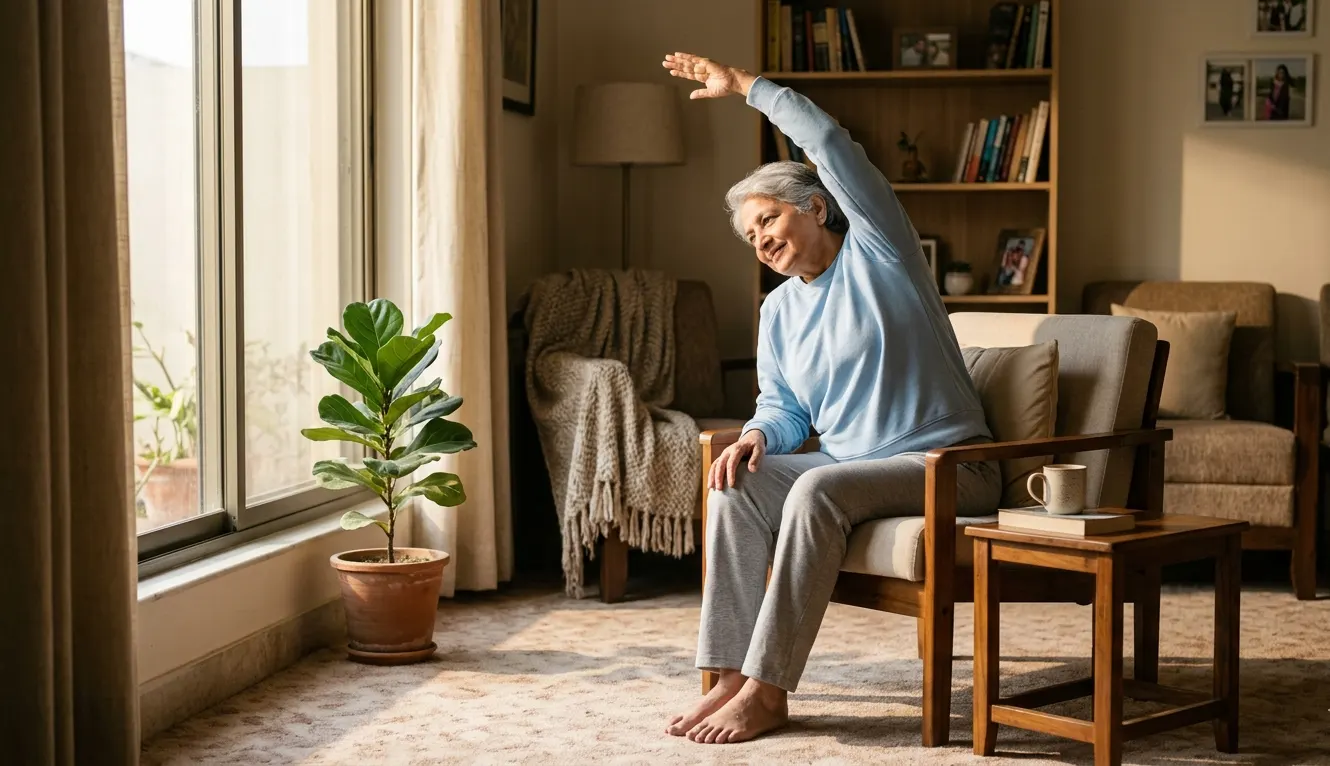

A few years ago, I started noticing something strange every time I stood up after sitting for a while.
It wasn’t pain.
It was stiffness.
I’d get out of a chair and take a few awkward steps before my legs seemed to remember how to move properly. My hips felt tight. My stride felt shorter. Even getting out of the car after a long drive required a moment to loosen up.At first, I blamed age.
After all, isn’t that what happens after 50?
Maybe partly.But I eventually realized something important.The people I knew who stayed active seemed to move much more comfortably than those who spent most of their day sitting.That made me curious.
I started experimenting with a few simple stretches every morning and after walks. Nothing extreme. No advanced yoga poses. Just gentle movements designed to keep my legs and hips mobile.Within a few weeks, I noticed a difference.
Walking felt smoother. Climbing stairs felt easier. Even getting out of bed in the morning felt less awkward.If stiff legs and hips have become part of your daily routine, these stretches may help you feel more comfortable and move with greater confidence.
Why Legs and Hips Become Stiff After 50
One thing I learned is that stiffness doesn’t appear overnight.
It develops gradually.
Long periods of sitting, reduced activity, and everyday habits can all contribute to decreased mobility.
Common signs include:
- Tight hips after sitting
- Difficulty bending comfortably
- Shorter walking stride
- Stiffness in the morning
- Reduced flexibility
- Feeling “slow” when first standing up
The good news is that gentle stretching can help maintain mobility and improve movement quality.
The Biggest Mistake I Made
When I first started stretching, I assumed harder was better.
I pushed myself into deep stretches and tried to increase flexibility as quickly as possible.
That approach didn’t work.
In fact, it often left me feeling sore.
The biggest lesson I learned was this:
Stretching should feel gentle.
A mild stretch is helpful.
Pain is not.
Once I stopped forcing movements and focused on consistency, I started seeing better results.
Before You Begin
A few simple guidelines:
- Move slowly
- Breathe naturally
- Stretch only to a comfortable point
- Avoid bouncing
- Stop if you feel pain
Think of stretching as a conversation with your body, not a competition.
Stretch 1: Seated Hamstring Stretch
Tight hamstrings often contribute to stiff legs.
How to do it
- Sit near the edge of a chair.
- Extend one leg forward.
- Keep your heel on the floor.
- Sit tall.
- Lean forward slightly.
Hold for 20–30 seconds.
Repeat on the opposite side.
This stretch became one of my daily favorites.
Stretch 2: Figure-Four Hip Stretch
This stretch targets the hips and glutes.
Steps
- Sit comfortably in a chair.
- Place one ankle across the opposite knee.
- Sit tall.
- Lean forward slightly.
Hold for 20–30 seconds.
Switch sides.
Many people notice tight hips almost immediately during this stretch.
Stretch 3: Standing Calf Stretch
Flexible calves support easier walking.
Steps
- Stand facing a wall.
- Place one foot behind you.
- Keep the heel down.
- Lean forward gently.
Hold for 20 seconds.
Repeat on the other side.
Stretch 4: Hip Flexor Stretch
This stretch helped me more than I expected.
Sitting for long periods often tightens the front of the hips.
Steps
- Stand beside a chair for support.
- Step one foot backward.
- Bend the front knee slightly.
- Shift your weight forward gently.
You should feel a stretch near the front of the hip.
Hold for 20–30 seconds.
Repeat on both sides.
Stretch 5: Seated Knee-to-Chest Stretch
A gentle movement for the hips and lower body.
Steps
- Sit comfortably.
- Lift one knee toward your chest.
- Hold lightly.
- Pause for several seconds.
Repeat several times on each side.
Stretch 6: Standing Side Leg Stretch
This movement improves hip mobility.
Steps
- Stand tall.
- Hold a chair for balance.
- Extend one leg slightly to the side.
- Hold briefly.
Repeat several times.
The movement should feel controlled and comfortable.
Stretch 7: Seated Butterfly Stretch
This stretch targets the inner thighs and hips.
Steps
- Sit on a sturdy chair.
- Spread your knees comfortably apart.
- Sit tall.
- Lean forward slightly.
Hold for 20 seconds.
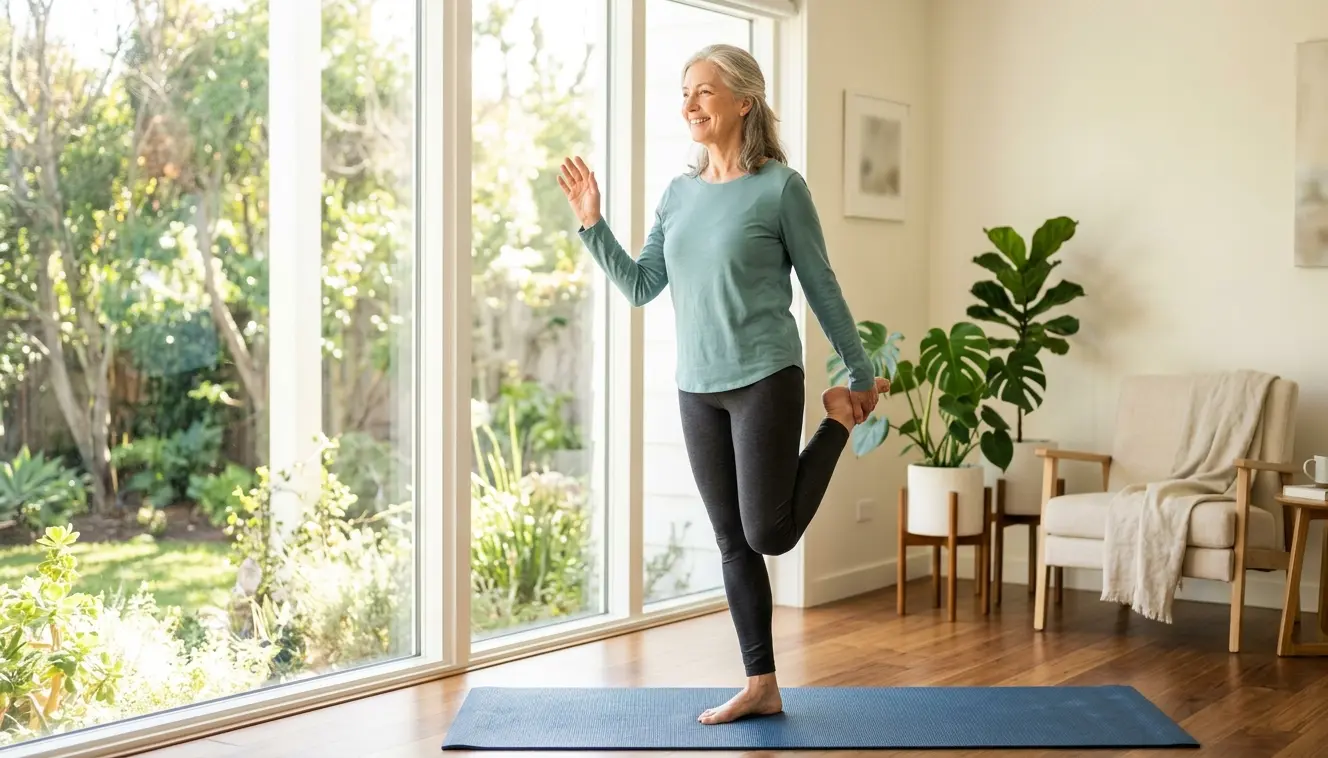
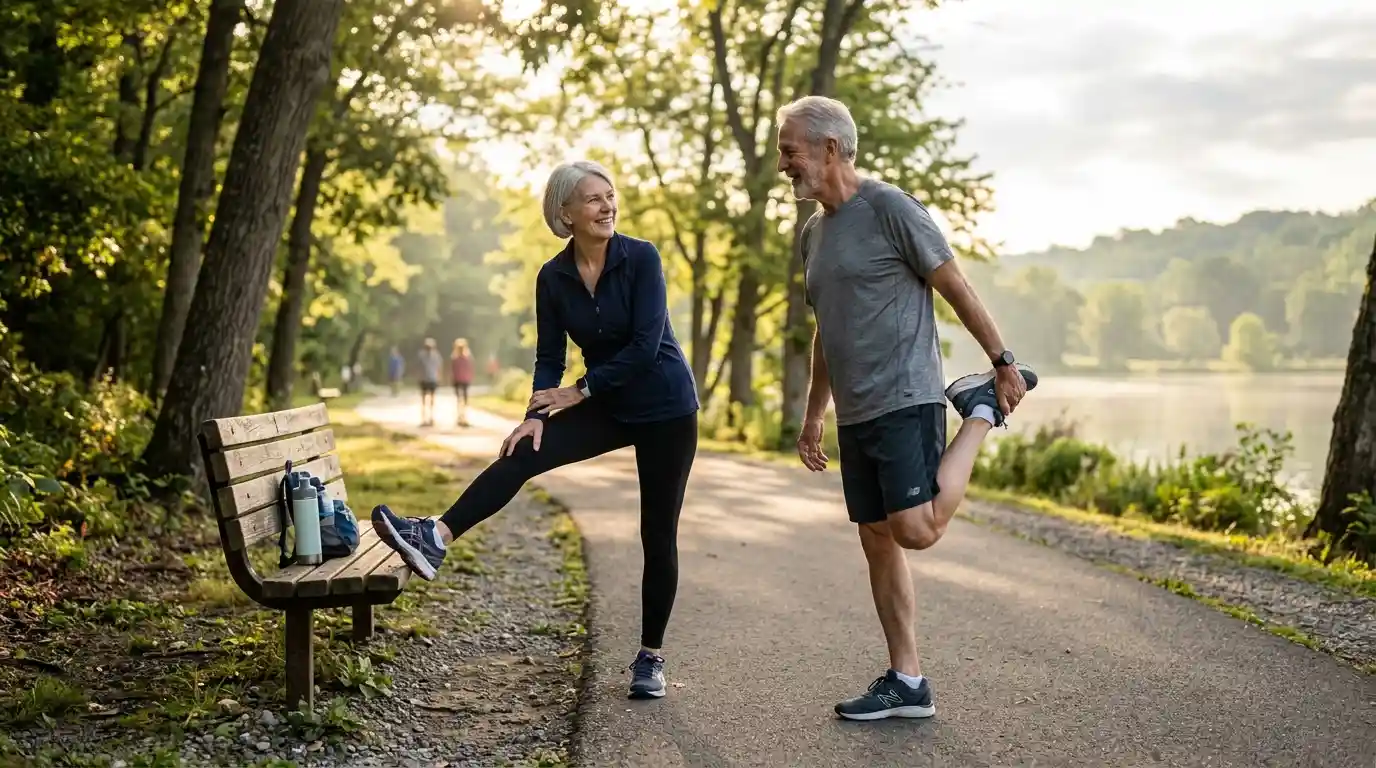
Stretch 8: Gentle Quad Stretch
The front of the thigh often becomes tight with age.
Steps
- Stand beside a wall or chair.
- Bend one knee.
- Hold your ankle if comfortable.
- Keep your posture upright.
Hold for 15–20 seconds.
Repeat on the other side.
If reaching your ankle is difficult, skip this stretch or modify it.
Stretch 9: Hip Circles
This is technically a mobility exercise, but it works wonderfully.
Steps
- Stand holding a chair.
- Lift one knee slightly.
- Draw small circles.
- Reverse direction.
Repeat on both sides.
Stretch 10: Full-Body Reach
This simple stretch helps finish the routine.
Steps
- Stand tall.
- Raise both arms overhead.
- Reach upward gently.
- Take several slow breaths.
Hold for 10–15 seconds.
Simple, but surprisingly effective.
My 10-Minute Routine for Stiff Legs and Hips
When I don’t have much time, I use this routine.
Minute 1
Full-body reach
Minute 2
Hamstring stretch
Minute 3
Figure-four stretch
Minute 4
Calf stretch
Minute 5
Hip flexor stretch
Minute 6
Knee-to-chest stretch
Minute 7
Side leg stretch
Minute 8
Butterfly stretch
Minute 9
Quad stretch
Minute 10
Hip circles
Ten minutes is often enough to noticeably reduce stiffness.
Helpful Tools That Made Stretching Easier
You don’t need much equipment.
Still, a few simple items helped.
Sturdy Chair
Probably the most useful stretching tool.
Yoga Mat
Provides comfort if you stretch on the floor.
Phone Timer
Keeps the routine organized.
Fitness Apps
Apps that remind you to move throughout the day can help reduce stiffness.
Other Habits That Helped My Legs Feel Better
Stretching works best when combined with movement.
A few habits made a difference for me.
Daily Walking
Even a short walk helps keep joints moving.
Standing More Often
Breaking up long periods of sitting reduced stiffness significantly.
Light Strength Training
Stronger muscles often support better movement.
Staying Consistent
Doing a little every day worked better than long stretching sessions once a week.
Common Mistakes to Avoid
Stretching Too Hard
Gentle stretching is usually more effective.
Holding Your Breath
Relaxed breathing helps muscles release tension.
Being Inconsistent
Flexibility improves gradually.
Ignoring Daily Movement
Stretching alone can’t overcome hours of inactivity.
Comparing Yourself to Others
Focus on your own mobility journey.
What Changed After a Few Weeks?
The improvements were subtle at first.
Then they became noticeable.
I experienced:
- Easier walking
- Less morning stiffness
- Better balance
- More comfortable movement
- Improved flexibility
- Greater confidence during daily activities
Perhaps the biggest change was that I stopped thinking about my hips and legs so much.
They simply felt better.
Final Thoughts
Stiff legs and hips don’t have to control your day.
A few minutes of gentle stretching can help improve flexibility, reduce stiffness, and make everyday movement feel more comfortable.
You don’t need complicated routines or advanced fitness programs.
Start with one or two stretches today.
Keep it simple.
Stay consistent.
Your future self will likely appreciate those few extra minutes of movement more than you realize.