
The first dumbbells I bought after turning 50 were embarrassingly light.
At least that’s what I thought at the time.I remember standing in a sporting goods store looking at rows of heavy weights. Part of me felt like I should buy something challenging. After all, I didn’t want to feel weak.
Thankfully, I ignored my ego and picked up a pair of light dumbbells instead.That decision probably saved me from injury and frustration.What surprised me was how effective those lighter weights became when used consistently.
Within a few weeks, everyday activities felt easier. Carrying groceries, lifting boxes, and even getting up from low chairs required less effort.The experience taught me something important:After 50, strength training isn’t about lifting the heaviest weight possible.
It’s about building strength safely and consistently.If you’re considering adding dumbbells to your fitness routine, here’s what I’ve learned from personal experience and what can help you get started.
Why Strength Training Matters After 50
Many adults focus on walking, stretching, or cardio exercises.
Those activities are valuable, but strength training plays a different role.
Strong muscles help support:
- Better balance
- Easier daily movement
- Improved posture
- Joint stability
- Healthy aging
- Greater independence
One of the biggest surprises for me was how much strength affects everyday life.
Simple tasks become noticeably easier when muscles stay active.
Why Light Dumbbells Are Perfect for Beginners
A common mistake is assuming heavier weights produce better results.
That isn’t always true.
For beginners over 50, light dumbbells offer several advantages:
Lower Injury Risk
Lighter weights allow you to focus on proper movement.
Better Form
Good technique matters more than heavy resistance.
Greater Confidence
Beginners often feel more comfortable starting light.
Easier Recovery
Muscles still get challenged without excessive strain.
Personally, I started with 3 to 5-pound dumbbells and found them more than enough.
How Often Should You Train?
A simple schedule works best.
For most beginners:
- 2 to 3 strength sessions per week
- At least one recovery day between workouts
- Walking or stretching on non-strength days
Consistency beats intensity every time.
Before You Start
A few basic guidelines can help.
Warm Up First
Spend 5 minutes walking or moving gently.
Move Slowly
Controlled movements improve effectiveness.
Breathe Normally
Avoid holding your breath.
Stop if You Feel Pain
Muscle effort is normal.
Pain is not.
Exercise 1: Dumbbell Bicep Curls
This was the first exercise I learned.
How to do it
- Hold a dumbbell in each hand.
- Keep your elbows near your sides.
- Lift the weights toward your shoulders.
- Lower slowly.
Repetitions
10–12 repetitions
This exercise strengthens the front of the arms.
Exercise 2: Seated Shoulder Press
A great exercise for shoulder strength.
Steps
- Sit in a sturdy chair.
- Hold dumbbells at shoulder level.
- Press upward slowly.
- Lower with control.
Repetitions
8–12 repetitions
Start with lighter weights until movement feels comfortable.
Exercise 3: Dumbbell Front Raises
This targets the front of the shoulders.
Steps
- Stand or sit upright.
- Hold dumbbells at your sides.
- Raise them to shoulder height.
- Lower slowly.
Repetitions
8–10 repetitions
Small weights are surprisingly effective here.
Exercise 4: Seated Dumbbell Row
Strong upper-back muscles support better posture.
Steps
- Sit near the edge of a chair.
- Lean slightly forward.
- Pull dumbbells toward your waist.
- Lower slowly.
Repetitions
10–12 repetitions
Focus on squeezing the shoulder blades together.
Exercise 5: Goblet Chair Squat
This combines lower-body strength with balance.
Steps
- Hold one dumbbell close to your chest.
- Stand in front of a chair.
- Lower until lightly touching the seat.
- Stand back up.
Repetitions
8–12 repetitions
This exercise helped me feel stronger during everyday activities.
Exercise 6: Dumbbell Deadlift
One of the most practical exercises for daily life.
Steps
- Hold dumbbells in front of your legs.
- Keep your back straight.
- Hinge at the hips.
- Return to standing.
Repetitions
8–10 repetitions
Practice slowly until comfortable.
Exercise 7: Standing Calf Raises with Dumbbells
This strengthens the lower legs.
Steps
- Hold dumbbells at your sides.
- Rise onto your toes.
- Pause briefly.
- Lower slowly.
Repetitions
12–15 repetitions
This movement also supports balance.
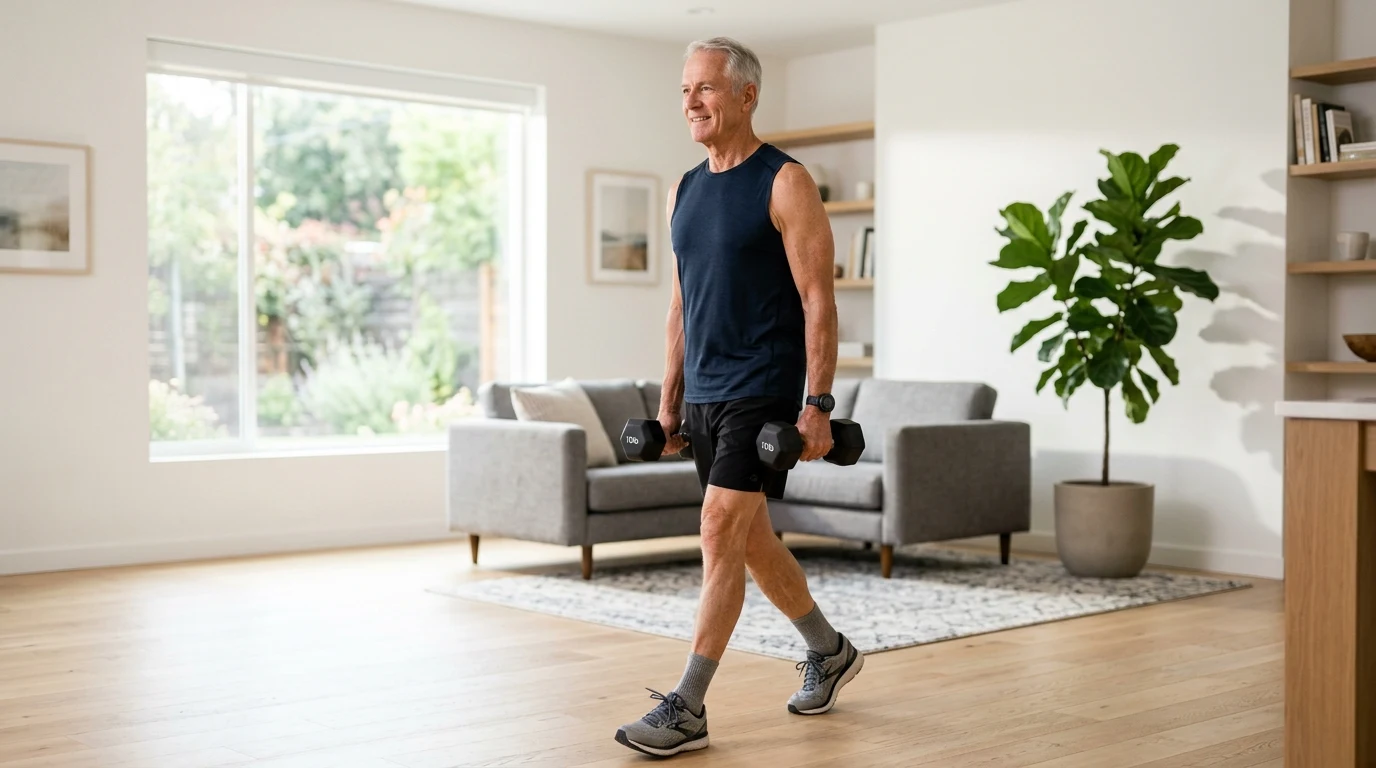
Exercise 8: Farmer’s Carry
This simple exercise feels very practical.
Steps
- Hold dumbbells at your sides.
- Stand tall.
- Walk slowly for 20–30 seconds.
Repetitions
2–3 rounds
It mimics carrying groceries and everyday objects.
My Simple 20-Minute Dumbbell Routine
This beginner routine worked well for me.
Warm-Up (5 Minutes)
- Easy walking
- Shoulder rolls
- Gentle stretching
Workout
Bicep Curls – 10 reps
Shoulder Press – 10 reps
Front Raises – 10 reps
Seated Rows – 10 reps
Chair Squats – 10 reps
Deadlifts – 10 reps
Calf Raises – 15 reps
Farmer’s Carry – 30 seconds
Cool Down
- Light stretching
- Deep breathing
- Short walk
The entire workout takes less than half an hour.
Real-Life Benefits I Noticed
The scale didn’t change much at first.
But other things did.
Carrying Groceries Felt Easier
One of the first improvements I noticed.
Better Posture
I naturally stood straighter.
Improved Confidence
I felt more capable and independent.
Easier Household Tasks
Lifting, reaching, and carrying became less tiring.
Better Balance
Stronger muscles contributed to steadier movement.
These practical benefits mattered more than appearance.
Common Mistakes to Avoid
Choosing Weights That Are Too Heavy
Start lighter than you think you need.
Rushing Through Repetitions
Slow, controlled movements work best.
Skipping Warm-Ups
A few minutes of movement prepares your body.
Ignoring Recovery
Rest is part of progress.
Comparing Yourself to Others
Your journey is unique.
Focus on consistency.
How to Progress Safely
After several weeks, you may want to increase difficulty.
Consider:
- Adding one or two repetitions
- Increasing workout frequency
- Using slightly heavier dumbbells
- Improving movement quality
Progress gradually.
There is no rush.
Helpful Equipment
Besides dumbbells, a few items can make workouts easier.
Adjustable Dumbbells
Save space and allow progression.
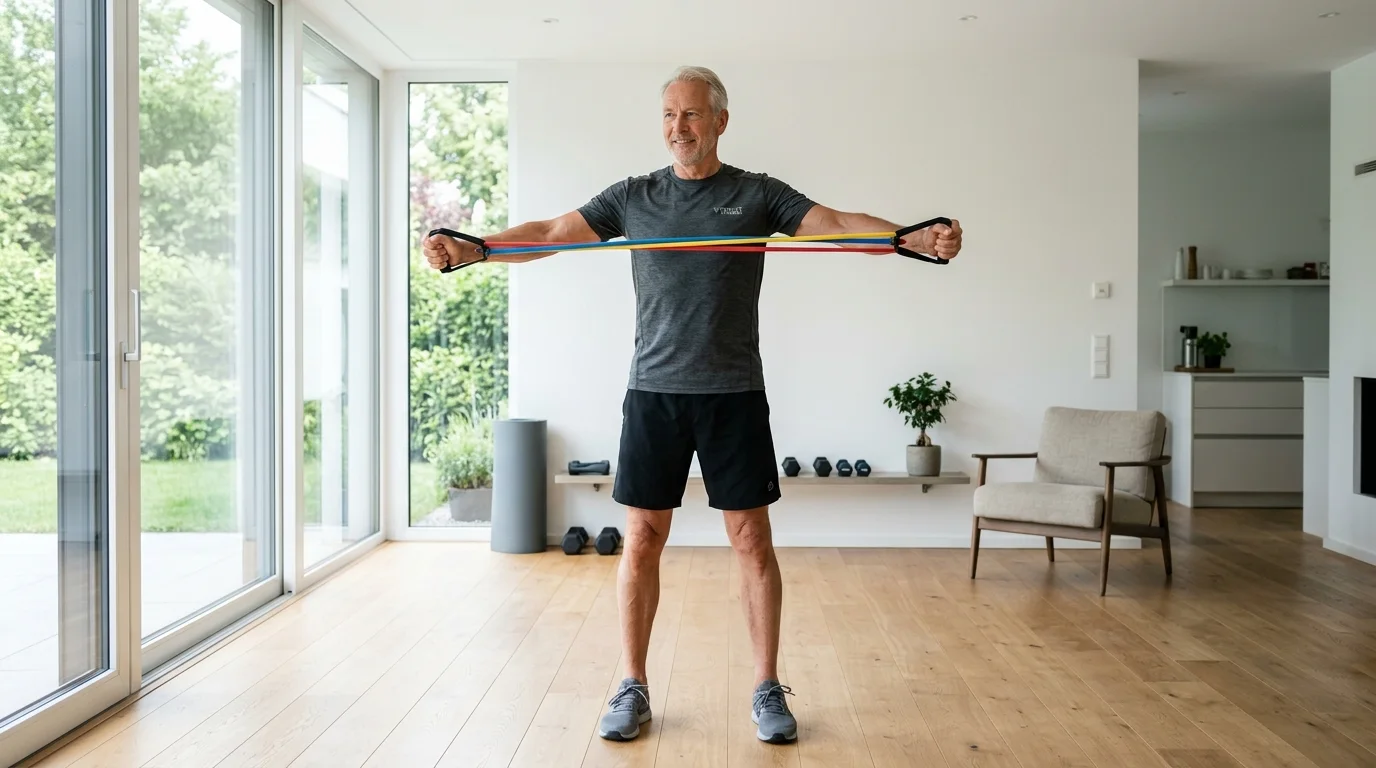
Resistance Bands
Great for variety.
Exercise Mat
Provides comfort during workouts.
Fitness Apps
Workout tracking apps can help maintain consistency.
What Results Can You Expect?
Everyone progresses differently.
Most beginners notice:
- Increased strength
- Better balance
- Improved mobility
- More confidence
- Easier daily movement
within several weeks of regular training.
The key is staying consistent.
Final Thoughts
Light dumbbell exercises can be one of the safest and most effective ways to build strength after 50.
You don’t need a gym membership.
You don’t need heavy weights.
You don’t need complicated workout plans.
A pair of light dumbbells, a few simple exercises, and a commitment to consistency can make a meaningful difference in how you move and feel every day.
Start small.
Focus on good form.
Be patient.
Strength doesn’t arrive overnight, but with steady effort, you’ll likely be surprised by what your body can still achieve.