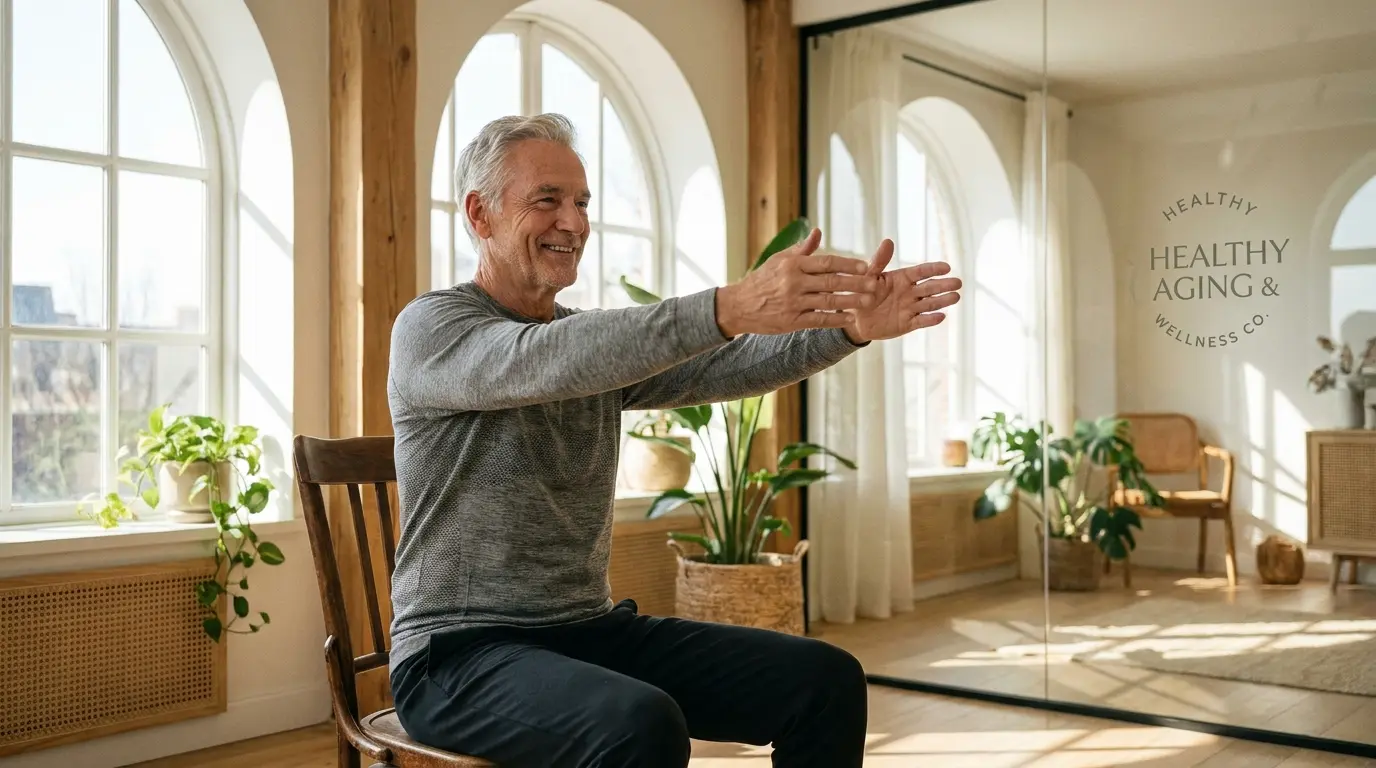

I didn’t really think much about leg strength until one morning I noticed something simple but frustrating I was holding onto the kitchen counter just to stretch after sitting for a while.
It wasn’t pain exactly. More like stiffness. That “my legs need a moment before they cooperate” feeling.
At first, I ignored it. I thought it was just part of getting older.
But then I noticed it again while climbing stairs. And again while getting up from a low chair. That’s when I realized something had quietly changed in my body.
Not suddenly. Slowly.
That’s how most people discover they need leg exercises after 50.
So I started looking for something easy. Something I could actually stick with. That’s when seated leg exercises came into the pictureand honestly, I underestimated them at first.
Why seated leg exercises actually matter more than people think
When people hear “leg workout,” they usually imagine squats, lunges, or gym machines.
But after 50, the real goal is different:
- Stay mobile
- Improve balance
- Reduce stiffness
- Maintain independence
- Avoid falls
Seated leg exercises do exactly that without putting pressure on joints.
What surprised me most was how quickly my legs responded once I stayed consistent—even with simple movements.
No heavy workouts. No gym membership. Just a chair and a few minutes.
My early mistake (and what I learned from it)
At the beginning, I thought “simple” meant “too easy.”
So I would rush through exercises or skip them entirely when I didn’t feel motivated.
That didn’t work.
What actually made a difference was slowing down and focusing on control.
Another mistake I made was using any random chair. One day I nearly lost balance because the chair had wheels. That was a wake up call.
Now I only use a stable, firm chair with feet flat on the ground.
Best seated leg exercises for adults over 50
This is the routine I personally found most effective. You don’t need all of them at once. Even 4–5 exercises daily can make a difference.
1. Seated Marching
This is usually my warm-up.
Sit upright and lift one knee at a time, like marching slowly.
It wakes up your hip flexors and improves circulation in the legs.
I usually do this for about 1 minute before moving to other exercises.
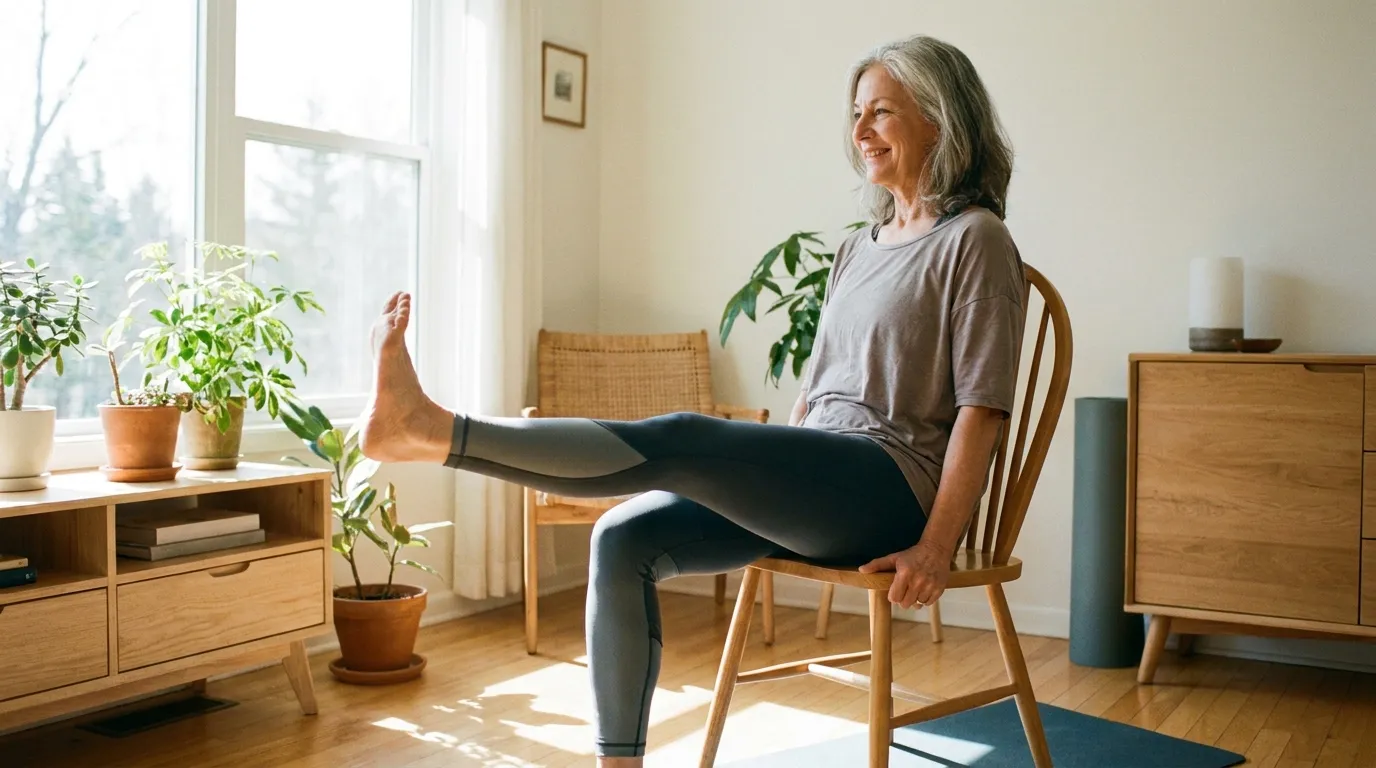
2. Seated Leg Extensions
This one helped me the most with knee stiffness.
Step-by-step:
- Sit straight in your chair
- Extend one leg forward
- Hold for 2–3 seconds
- Lower slowly
- Switch legs
At first, I could barely hold it steady. After a few weeks, it felt much smoother.
3. Heel Raises (Seated)
This is simple but surprisingly effective.
Keep your toes on the ground and lift your heels up.
It strengthens calf muscles, which are important for balance.
I noticed walking felt more stable after a couple of weeks of doing this regularly.
4. Toe Raises
Now reverse it—keep heels down and lift your toes.
It strengthens the front of your lower legs.
This helps with walking control, especially on uneven surfaces.
5. Seated Knee Lifts
This one activates your core and lower body together.
Lift one knee toward your chest, hold briefly, then lower.
It looks easy, but you feel it quickly.
6. Seated Leg Out (Side Extension)
Extend one leg slightly to the side, hold, and bring it back.
This improves hip mobility and balance.
I didn’t think much of it at first, but it helped reduce that “tight hips” feeling.
7. Ankle Circles
Lift one foot slightly and rotate your ankle slowly.
This improves joint flexibility and reduces stiffness.
It’s also a great one to do while watching TV.
8. Heel Slides (Seated)
Slide one foot forward along the floor, then bring it back.
It feels gentle but keeps the knee joint active.
Perfect for beginners who are very stiff at the start.
A simple 10-minute seated leg routine
If you want something structured, here’s a great chair exercises for beginners over 50 10-min routine that I usually recommend:
- Seated marching – 1 minute
- Leg extensions – 1 minute each leg
- Heel raises – 1 minute
- Toe raises – 1 minute
- Knee lifts – 1 minute
- Ankle circles – 1 minute
- Heel slides – 2 minutes
That’s it.
Ten minutes total.
Nothing complicated.
Tools that made it easier for me
You don’t need equipment, but a few small things helped me stay consistent:
- Google Fit app → tracking daily movement
- Simple timer app → keeping workouts short and focused
- Resistance bands → added light difficulty on stronger days
- Smartwatch (optional) → step tracking motivation
The real game-changer wasn’t the tools—it was consistency.
Common mistakes people make
I’ve either done these myself or seen others struggle with them:
- Moving too fast Slow movement gives better control and results.
- Holding breath Breathing naturally makes exercises easier and safer.
- Using unstable seating Always use a solid chair. No wheels.
- Expecting instant results Leg strength improves gradually, not overnight.
What changes after a few weeks
The changes weren’t dramatic at first.
But they were noticeable in daily life:
- Standing up felt easier
- Less stiffness after sitting
- Better balance while walking
- More confidence on stairs
- Less “heavy leg” feeling
These small improvements added up over time.
And that’s what kept me going.
Final thoughts
Seated leg exercises don’t look impressive from the outside.
But they work in a quiet, consistent way.
They’re not about pushing your limits. They’re about keeping your body active enough so daily life feels easier.
If you’re just starting, don’t overthink it. Learn more with the complete beginners guide to getting fit after 50.