
I still remember the first time I noticed my balance wasn’t quite what it used to be.
It wasn’t anything dramatic. I was just stepping off a small curb outside a shop, and for a split second, I had to catch myself on the wall next to me.
Nothing happened. No fall. No injury.
But that tiny moment stayed in my head longer than I expected.
A few days later, I noticed something else—standing on one leg while putting on socks suddenly didn’t feel as effortless as before. That’s when I realized balance isn’t something you think about… until it starts changing.
And that’s exactly what pushed me to start simple balance exercises at home.
Not gym workouts. Not intense training. Just small, steady movements I could do in my living room.
Why balance becomes more important after 50
Most people think balance is only about avoiding falls.
But it’s more than that. Good balance helps with:
Walking confidently
Climbing stairs without hesitation
Standing longer without discomfort
Preventing stiffness in legs
Moving without that “careful step” feeling
What surprised me most is how quickly balance can improve once you start practicing it regularly—even with simple exercises.
Integrating focused balance exercises for adults over 50 is one of the most effective ways to target these specific needs.
My early mistake (and what I learned)
At first, I thought balance training meant standing on one leg for a long time and trying not to fall. That didn’t go well.
I pushed too hard, held positions too long, and ended up feeling more unstable than before.
What I learned is this:
Balance improves best with short, controlled movements not risky challenges.
Once I slowed down and made things simpler, everything became easier. Discovering how to improve balance after 50 without gym memberships or complex routines completely shifted my perspective on fitness.
10 simple balance exercises for adults over 50
You don’t need equipment for most of these. Just a safe space and a chair nearby for support.
1. Heel-to-Toe Stand
Stand with one foot directly in front of the other, like walking on a straight line.
Hold for 10–20 seconds.
This was one of the first exercises that made me feel more stable while walking.
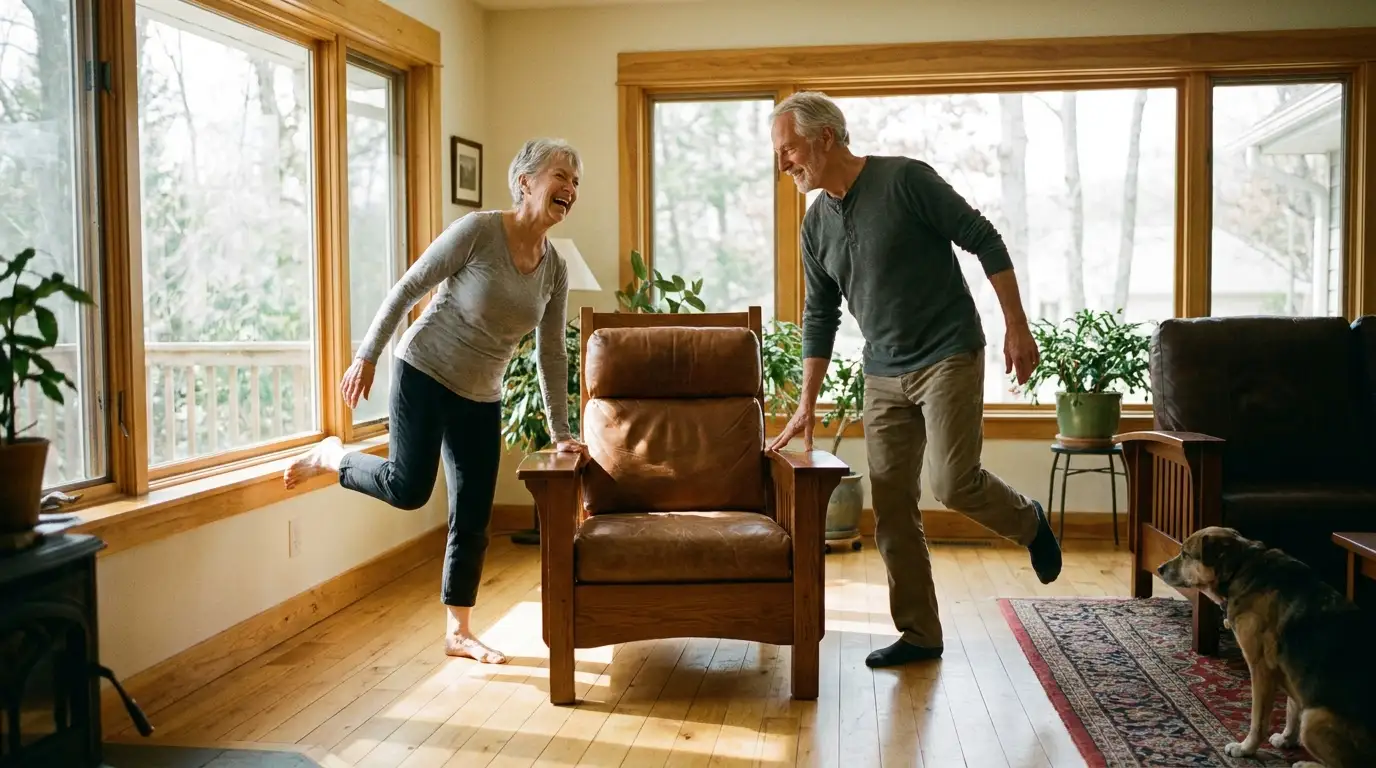
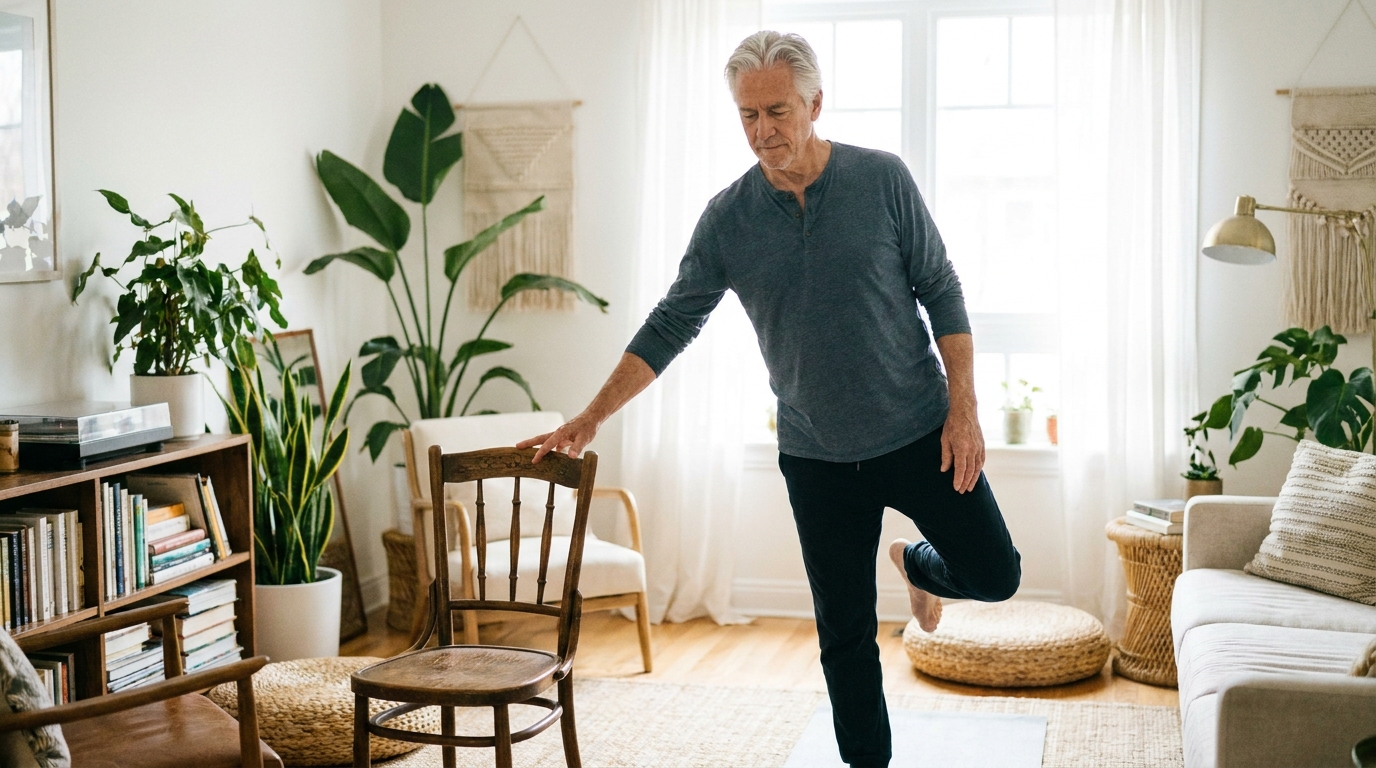
2. Single Leg Stand (with support)
Hold a chair lightly and lift one foot off the ground.
Try to hold for a few seconds.
Over time, I reduced how much I relied on the chair.
3. Weight Shifting
Stand with feet shoulder-width apart.
Shift weight slowly from one leg to the other.
This helps your body learn control without lifting your feet.
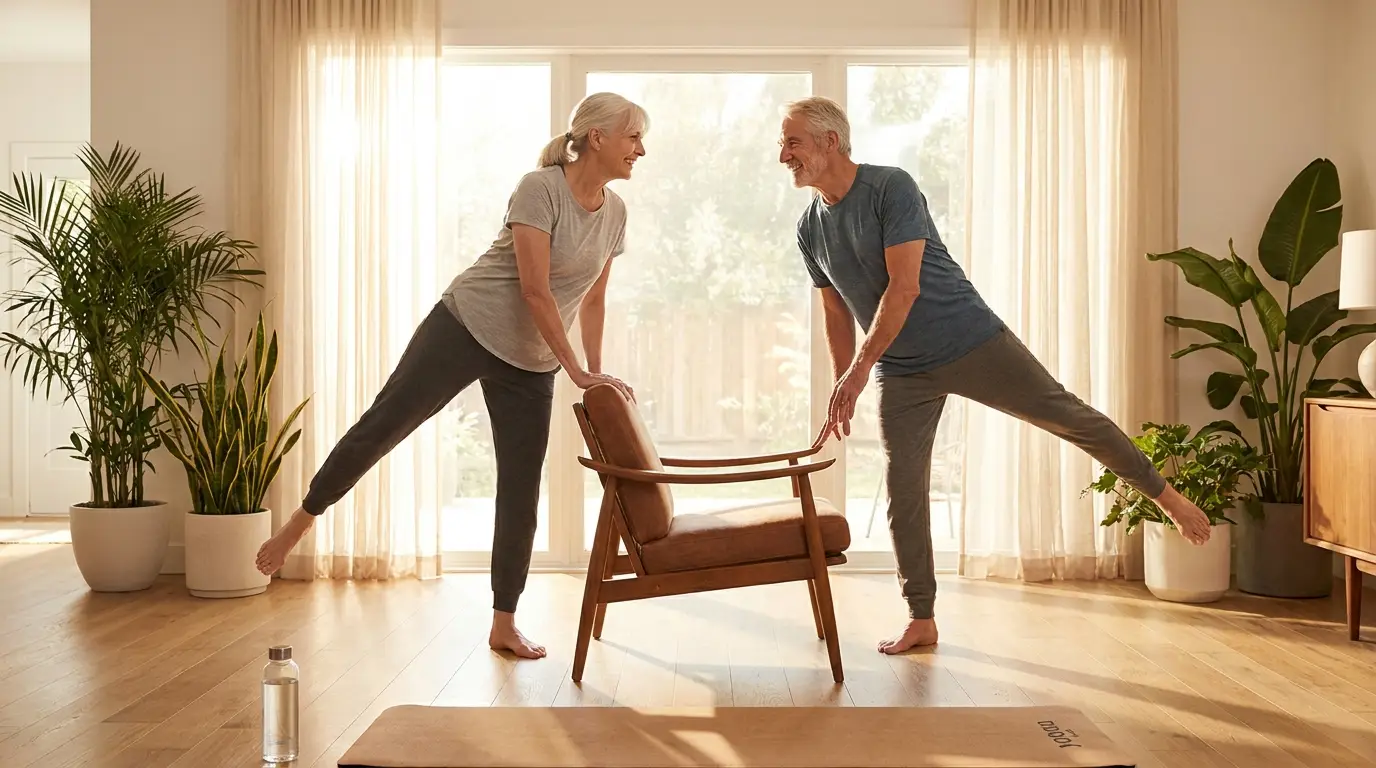
4. Side Leg Raises
Hold a chair and slowly lift one leg to the side.
It strengthens hips, which play a big role in balance.
5. Heel Raises (Standing)
Lift your heels off the ground and slowly lower them.
This improves ankle strength and stability.
6. Toe Raises
Lift your toes while keeping heels on the ground.
It improves control when walking on uneven surfaces.
7. Marching in Place
Slowly lift knees one at a time while standing.
It feels simple, but it builds coordination.
8. Sit-to-Stand Exercise
Sit on a chair, then stand up slowly and sit back down.
This one directly improves real-life balance for daily activities.
9. Clock Reach
Imagine a clock in front of you.
Reach your hand toward different “hours” while maintaining balance.
This improves coordination between upper and lower body.
10. Walking Heel-to-Toe
Walk in a straight line placing heel directly in front of toe.
It’s a bit challenging at first, but very effective.
A simple 10-minute balance routine
If you don’t know where to start, try this chair exercises for beginners over 50 10-min routine:
- Weight shifting – 1 minute
- Heel raises – 1 minute
- Toe raises – 1 minute
- Marching in place – 2 minutes
- Single leg stand – 2 minutes (both sides)
- Sit-to-stand – 2 minutes
- Heel-to-toe walk – 1 minute
That’s it. Ten minutes total.
Helpful tools that made things easier
Nothing complicated, just small helpers:
- Google Fit app → tracking daily movement
- Simple timer app → keeping sessions short
- Smartwatch (optional) → step and activity tracking
- Chair for support → essential for safety If you prefer a completely seated option, check out senior chair exercises home fitness.
- Yoga mat → for comfort on standing exercises
The biggest support, though, was consistency not equipment.
Common mistakes people make
I made most of these myself in the beginning:
❌ Trying to rush results
Balance improves slowly, not instantly.
❌ Practicing on unstable surfaces
Always use a flat, safe floor.
❌ Not using support when needed
A chair is not cheating—it’s safety.
❌ Holding positions too long
Short holds are more effective than risky long ones.
What changes after a few weeks
The improvements are subtle but real:
- Less wobbling while standing
- More confidence walking outdoors
- Easier stair climbing
- Better control when turning
- Reduced fear of slipping
What surprised me most was not just physical improvement but mental confidence.To progress further after building your confidence, a structured walking program for beginners over 50 a simple 4-week plan can help you safely expand your activity.
You stop “overthinking every step.
Final thoughts
Balance exercises don’t look impressive.
They’re quiet, simple, almost boring at first. But they do something important they help you feel steady again in everyday life.
If you’re starting today, don’t aim for perfection. Just pick 2–3 exercises. Do them slowly. Repeat tomorrow. That small consistency is what builds real stability over time.