
A few years ago, I noticed something strange while putting on my shoes.
I was standing on one leg, something I had done thousands of times without thinking, and suddenly I felt a little wobble. Nothing serious. I caught myself immediately.
But it got my attention.
A few weeks later, I noticed it again while stepping off a curb. Then while reaching for something on a high shelf. Small moments, but enough to make me realize that balance isn’t something we appreciate until it starts changing.
The interesting part is that I wasn’t out of shape. I walked regularly and stayed reasonably active. Yet my balance wasn’t as reliable as it used to be.
Like many people, my first thought was that I’d need a gym membership, special equipment, or some complicated fitness plan.
I was wrong.
Most of the improvements I experienced came from learning how to improve balance after 50 without gym memberships, through simple movements at home that took only a few minutes a day.
If you’re over 50 and want to feel steadier without stepping foot inside a gym, here’s what actually worked.
Why Balance Changes After 50:
One thing I learned is that balance isn’t controlled by just one thing.
It’s influenced by:
- Leg strength
- Core stability
- Joint mobility
- Coordination
- Vision
- Confidence
As we age, some of these areas naturally decline if we don’t use them regularly.
Incorporating dedicated balance exercises for adults over 50 into your routine targets these exact gaps. The good news is that balance responds surprisingly well to practice.
Just like learning a skill, your body gets better at staying steady when you give it regular opportunities to do so.
The Biggest Mistake I Made
At first, I thought balance training meant standing on one foot for as long as possible. That lasted about two days. I quickly realized I was turning balance exercises into a competition with myself. Instead of improving, I felt frustrated.
The lesson was simple: balance improves through consistency, not difficulty. Once I started focusing on easy movements done regularly, I noticed progress.
Start With Walking More Intentionally
Walking is one of the most underrated balance exercises available. Most people already walk every day, but adding a little awareness makes a difference.
Instead of rushing, try:
- Walking heel to toe occasionally
- Looking ahead instead of down
- Maintaining good posture
- Swinging your arms naturally
I started doing this during short neighborhood walks and noticed better coordination within a few weeks. If you are entirely new to a structured routine, finding a good how much should you walk after 50 beginner guide can help set the right baseline for your body.
Exercise 1: Weight Shifts
This is one of the simplest exercises and one of the most effective.
How to do it:
Stand near a chair or countertop. Place your feet shoulder-width apart. Slowly shift your weight to your right foot. Hold briefly. Shift to your left foot. Repeat for one minute. It teaches your body how to control movement instead of reacting to it.
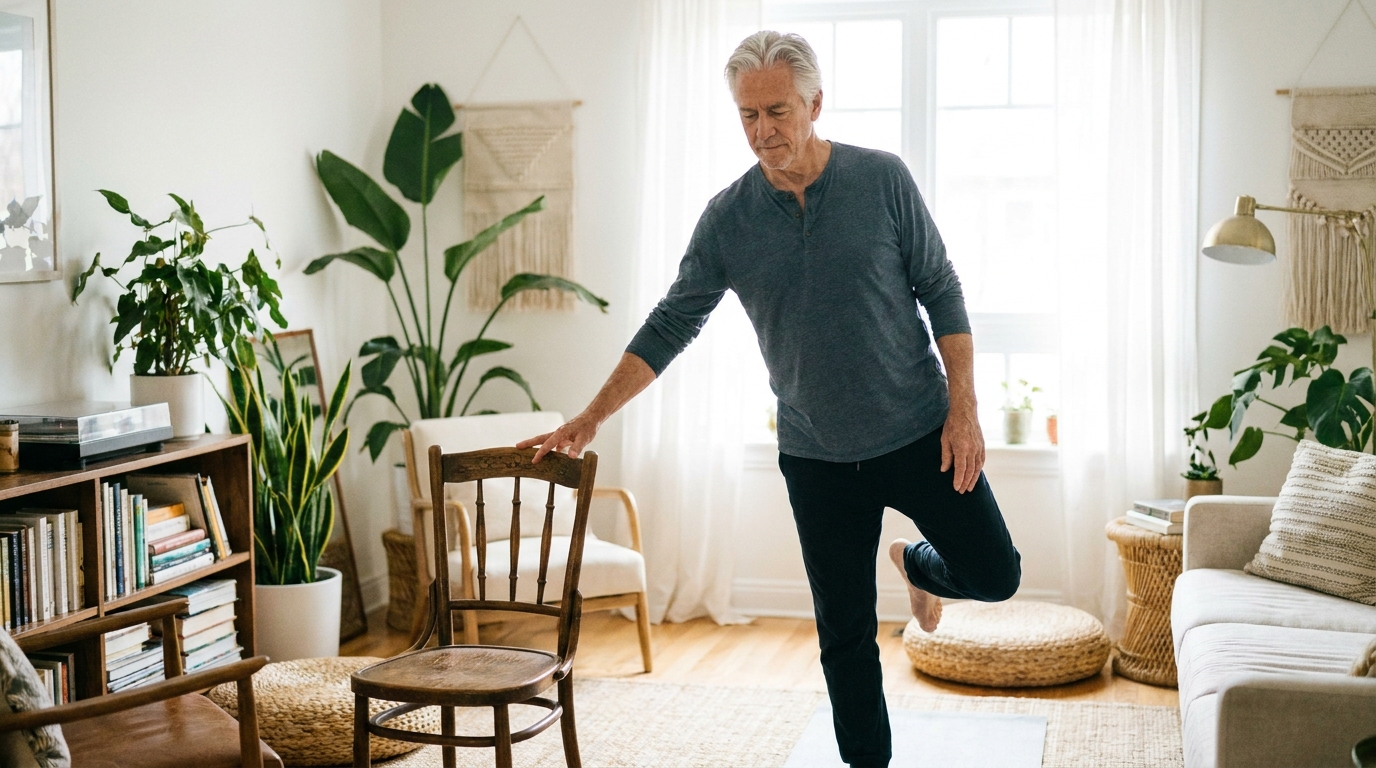
Exercise 2: Single-Leg Stand
This exercise looks easy until you try it.
Steps:
- Stand beside a sturdy chair.
- Hold the chair lightly.
- Lift one foot slightly off the floor.
- Hold for 10–20 seconds.
- Switch sides.
When I first started, I needed the chair almost the entire time. That’s perfectly normal. Using a reliable point of support is an excellent habit to form when practicing standing balance exercises for seniors using a chair.
Exercise 3: Heel Raises
Strong calves play a bigger role in balance than many people realize.
Steps:
- Stand tall.
- Hold a chair if needed.
- Raise your heels.
- Pause.
- Lower slowly.
Do 10–15 repetitions. This exercise helped me feel more stable while walking on uneven surfaces.
Exercise 4: Toe Raises
This strengthens the muscles along the front of your lower legs.
Steps:
- Keep heels on the floor.
- Lift your toes upward.
- Hold briefly.
- Lower slowly.
- Perform 10–15 repetitions.
Exercise 5: Marching in Place
Marching improves coordination, balance, and mobility simultaneously.
Steps:
- Stand upright.
- Lift one knee.
- Lower it.
- Lift the opposite knee.
- Continue for one minute.
It may seem simple, but it’s surprisingly effective.
Exercise 6: Sit-to-Stand
If I had to recommend just one exercise for adults over 50, this would be near the top of the list.
How to do it:
Sit in a sturdy chair.
Stand up slowly.
Sit back down with control.
Repeat 8–12 times.
This movement directly improves everyday activities.
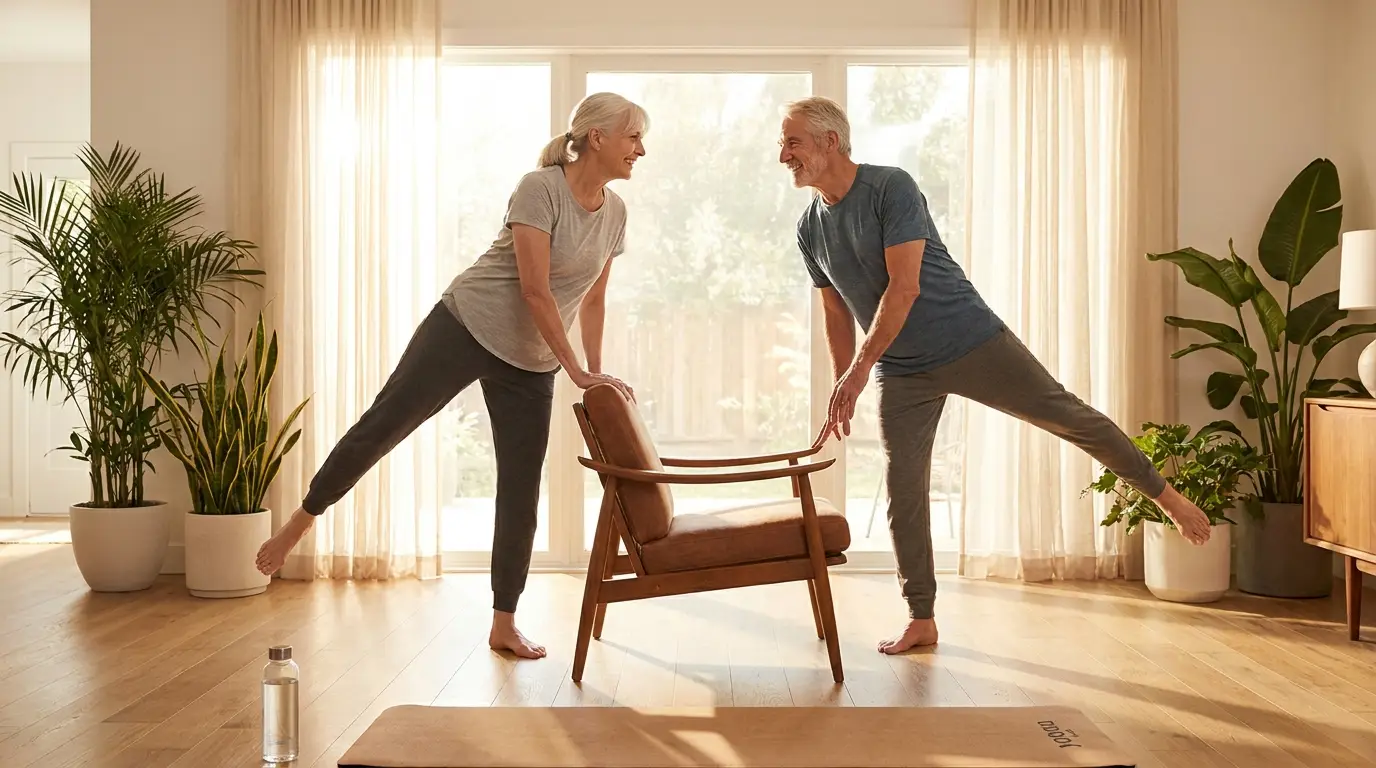
Exercise 7: Side Leg Raises
Hip strength is critical for balance.
Steps:
- Hold a chair.
- Lift one leg out to the side.
- Lower slowly.
- Repeat 10 times.
- Switch sides.
This exercise targets muscles that often get neglected.
Create a Simple 10-Minute Routine Here’s the chair exercises for beginners over 50 10-min routine that worked best for me:
Minute 1
Weight shifts
Minute 2
Heel raises
Minute 3
Toe raises
Minutes 4–5
Marching in place
Minutes 6–7
Single-leg stands
Minutes 8–9
Side leg raises
Minute 10
Sit-to-stand exercise That’s it. No machines. No gym. No complicated schedule.
Helpful Tools That Kept Me Consistent
You don’t need much equipment, but a few tools helped.
Phone Timer
A basic timer prevented me from constantly checking the clock.
Google Fit or Apple Health
Tracking daily movement helped me stay accountable.
Fitness Tracker
I used a smartwatch for a while. Seeing activity numbers improve was surprisingly motivating.
Stable Chair
Probably the most important piece of equipment. Use a sturdy chair without wheels. To learn how to make the most of it without ever needing to stand up, you can also explore options for senior chair exercises home fitness.
Small Lifestyle Changes That Improved Balance
The exercises helped, but a few daily habits made a noticeable difference.
Get Up More Often
Long periods of sitting can make your body feel stiff and unstable. I started standing up every hour, even if only for a minute.
Improve Lighting at Home
This sounds unrelated, but better visibility improves confidence and coordination.
Wear Supportive Shoes
Walking around in worn-out slippers wasn’t helping my balance. A supportive shoe made movement feel more secure.
Stretch Regularly
Tight ankles and hips can affect balance more than people realize. Even five minutes of stretching helped.
Common Mistakes to Avoid
Doing Too Much Too Soon
Balance training doesn’t need to be intense. Start small and build gradually.
Looking Down Constantly
Keep your eyes focused ahead whenever possible.
Skipping Practice
Doing exercises once a week won’t create meaningful improvement. Consistency matters.
Ignoring Strength
Balance and strength work together. Exercises like sit-to-stand are valuable because they improve both.
What Changed After a Few Weeks
The improvements weren’t dramatic overnight. But I started noticing small wins:
- Standing on one leg felt easier
- Stairs felt more comfortable
- Walking outdoors felt more confident
- Less wobbling when changing direction
- Better overall body awareness
- The biggest surprise wasn’t physical.
It was mental. I stopped thinking about balance all the time because I trusted my body more.
Final Thoughts
Improving balance after 50 doesn’t require a gym membership, expensive equipment, or long workouts.
Most of the progress comes from simple movements practiced consistently.
A few minutes a day can improve stability, confidence, and mobility in ways that carry over into everyday life.
If you’re getting started, choose two or three exercises from this guide and try them today. You don’t need to master everything at once.
The goal isn’t perfection. It’s feeling a little steadier tomorrow than you do today.