
A few years ago, I noticed something that caught me off guard.
I was standing in the kitchen, reaching for a mug on a high shelf, when I felt a slight wobble. It lasted less than a second, but it was enough to make me stop and think.
I wasn’t injured. I wasn’t sick. But my balance wasn’t as automatic as it used to be.
At first, I ignored it.
Then I started noticing other small moments. Stepping off a curb felt a little less confident. Putting on shoes while standing became trickier. Walking on uneven ground required more attention than before.
That’s when I decided to do something about it.
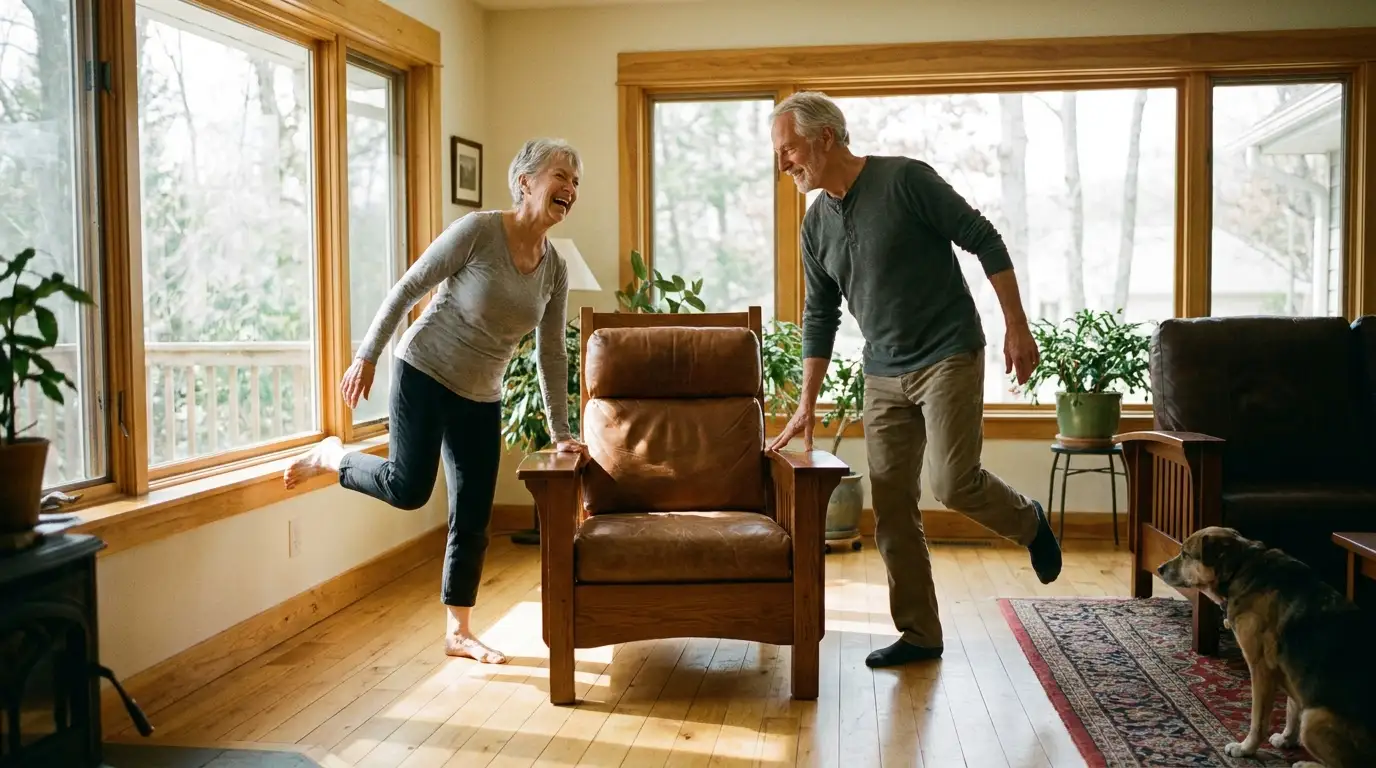
The surprising part was that I didn’t need a gym membership, expensive equipment, or complicated workouts. Most of the improvement came from practicing simple standing balance exercises for seniors using a chair at home while using a chair for support.
If you’re over 50 or helping an older family member stay active, these exercises can be a safe and practical way to improve stability and confidence.
Why Balance Training Matters More Than Most People Realize
When people think about fitness, they often focus on strength, weight loss, or cardio.
Balance tends to get overlooked.
The reality is that balance affects nearly everything you do:
- Walking
- Climbing stairs
- Getting out of a chair
- Carrying groceries
- Moving around safely at home
Good balance also helps reduce the risk of falls, which becomes increasingly important as we age. Dedicated balance exercises for adults over 50 target these weaknesses specifically.
The best part is that balance can improve at almost any age when practiced consistently.
Why Use a Chair for Support?
One of the biggest mistakes I made early on was trying balance exercises without any support nearby.
I wasn’t in danger, but I felt nervous.
That nervousness made it harder to relax and focus on the movement.
Using a sturdy chair changed everything.
A chair provides:
- Extra confidence
- Better safety
- Improved posture
- Less fear of losing balance
Think of the chair as a training partner rather than a crutch. If you prefer to stay completely seated during your physical activity, looking into general senior chair exercises home fitness is another highly practical strategy.
As your balance improves, you’ll naturally rely on it less.
Before You Begin
- Choose a sturdy chair without wheels.
- Place it on a flat, non slip surface.
- Wear comfortable shoes or exercise barefoot if your floor provides good traction.
- Keep movements slow and controlled.
The goal is stability, not speed.
Exercise 1: Weight Shifts
This is one of the easiest ways to begin training balance.
How to do it:
- Stand behind a chair.
- Lightly hold the backrest.
- Shift your weight to your right foot.
- Hold for a few seconds.
- Shift to your left foot.
- Repeat for one minute.
This teaches your body how to control movement instead of reacting to it.
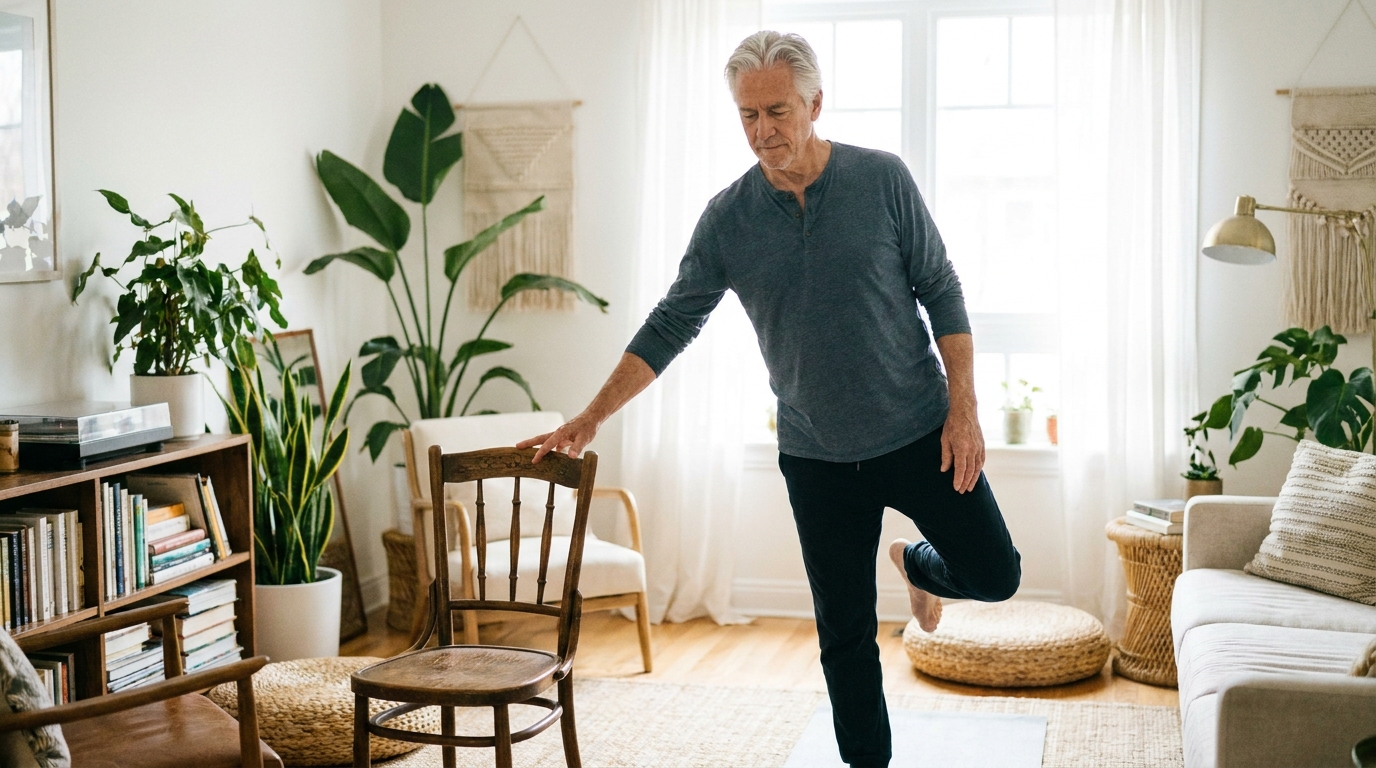
Exercise 2: Single-Leg Stand
This exercise quickly reveals how much balance you’re actually using.
Steps:
- Hold the chair lightly.
- Lift one foot a few inches from the floor.
- Hold for 10–20 seconds.
- Lower your foot.
- Repeat on the other side.
When I first started, ten seconds felt surprisingly challenging.
That’s completely normal. This is an essential skill to learn when discovering how to improve balance after 50 without gym memberships.
Exercise 3: Heel Raises
Strong calves play a major role in stability.
Steps:
- Stand tall behind the chair.
- Hold the chair lightly.
- Rise onto your toes.
- Pause briefly.
- Lower slowly.
Perform 10–15 repetitions.
This exercise improved my confidence when walking on slopes and uneven surfaces.
Exercise 4: Toe Raises
Toe raises strengthen the muscles on the front of your lower legs.
Steps:
- Keep heels planted.
- Lift your toes upward.
- Hold briefly.
- Lower slowly.
Repeat 10–15 times.
This simple movement helps improve foot control during walking.
Exercise 5: Marching in Place
Marching combines balance, coordination, and mobility.
Steps:
- Hold the chair lightly.
- Lift one knee.
- Lower it slowly.
- Lift the opposite knee.
- Continue for one minute.
It may feel easy at first, but it challenges your balance more than expected.
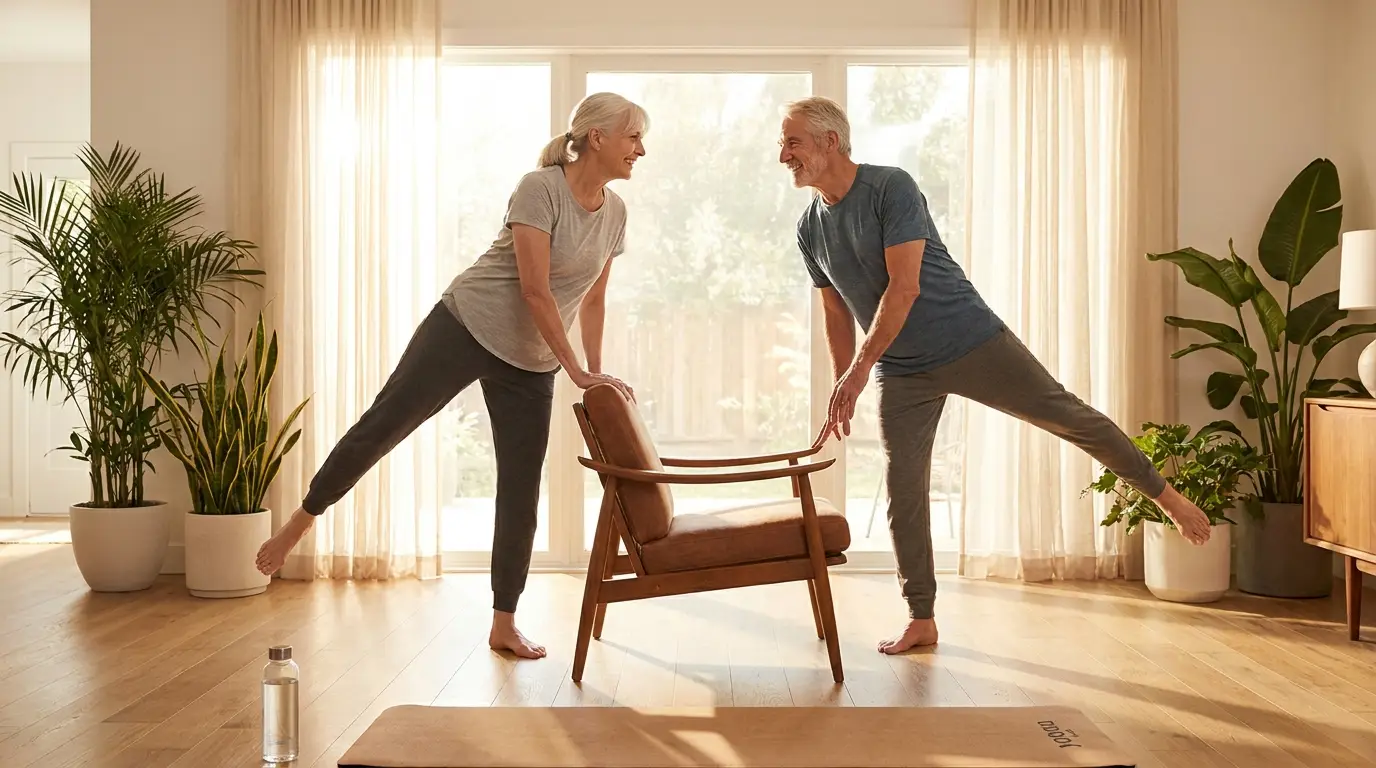
Exercise 6: Side Leg Raises
Hip strength is closely connected to balance.
Steps:
- Stand behind the chair.
- Lift one leg out to the side.
- Keep your body upright.
- Lower slowly.
Complete 10 repetitions per side.
I noticed this exercise made walking feel smoother after a few weeks.
Exercise 7: Back Leg Raises
This movement strengthens the glutes and improves posture.
Steps:
- Hold the chair.
- Extend one leg behind you.
- Pause briefly.
- Return slowly.
Repeat 10 times on each side.
Avoid leaning forward during the movement.
Exercise 8: Heel-to-Toe Stand
This exercise mimics walking on a straight line.
Steps:
- Place one foot directly in front of the other.
- Hold the chair lightly.
- Maintain position for 20–30 seconds.
- Switch feet.
This is excellent for improving stability during everyday walking.
Exercise 9: Mini Knee Bends
Small knee bends help build strength and balance together.
Steps:
- Hold the chair.
- Bend knees slightly.
- Return to standing.
- Repeat 10–12 times.
Keep the movement small and controlled.
Exercise 10: Controlled Reaches
This exercise improves coordination and body awareness.
Steps:
- Stand behind the chair.
- Hold with one hand.
- Reach forward with the opposite hand.
- Return to center.
- Reach to the side.
- Repeat several times on each side.
This exercise feels surprisingly practical because it mimics daily activities.
A Simple 10-Minute Balance Routine
If you want a complete beginner-friendly routine, try this exact chair exercises for beginners over 50 10-min routine:
Minute 1
Weight shifts
Minute 2
Heel raises
Minute 3
Toe raises
Minutes 4–5
Marching in place
Minutes 6–7
Single-leg stands
Minute 8
Side leg raises
Minute 9
Back leg raises
Minute 10
Heel-to-toe stand
Ten minutes is enough to make a difference when done consistently.
Tools That Helped Me Stay Consistent
You don’t need much equipment, but a few simple tools can help.
Phone Timer
I used a timer to keep sessions short and manageable.
Google Fit or Apple Health
Tracking activity helped me stay accountable.
Smartwatch
A fitness tracker isn’t necessary, but seeing movement trends can be motivating.
Supportive Shoes
Comfortable footwear improved stability during practice.
Common Mistakes to Avoid
Rushing Through Movements
Balance improves through control, not speed.
Looking Down Constantly
Keep your eyes focused forward whenever possible.
Gripping the Chair Too Tightly
Use light support.
The goal is to let your body do most of the work.
Skipping Practice
Balance training works best when done regularly.
A few minutes most days is better than one long workout each week.
What Improvements Can You Expect?
Most people don’t notice dramatic changes overnight.
Instead, you’ll likely experience small wins:
More confidence while walking
Better posture
Easier stair climbing
Improved stability when standing
Less hesitation during daily activities
Those small improvements build on each other over time. Over time, you can expand this foundational work by following a walking program for beginners over 50 a simple 4-week plan to take your newfound confidence out into the world.
Final Thoughts
Standing balance exercises don’t need to be complicated to be effective.
A sturdy chair, a few minutes a day, and a little consistency can go a long way toward helping you feel steadier and more confident.
The goal isn’t perfect balance.
The goal is making everyday life feel easier, safer, and more comfortable.
Start with one or two exercises today. Once they feel comfortable, add another.
Small steps often lead to the biggest improvements.