

A few years ago, I carried a heavy grocery bag from the car to the kitchen and noticed something surprising.The bag wasn’t unusually heavy.
I wasn’t injured.Yet my arms felt tired much faster than they used to.A few days later, I struggled to lift a storage box onto a shelf that would have been easy for me years earlier.
That was the moment I realized something important.I wasn’t getting weaker because I was getting older.I was getting weaker because I had stopped challenging my muscles.
Like many adults over 50, I had spent years focusing on walking and staying generally active. Those activities were great for my health, but I wasn’t doing much to maintain my strength.Once I started adding a few simple strength exercises into my weekly routine, everyday tasks became easier again.
Getting out of chairs felt smoother.
Carrying groceries felt easier.
Even climbing stairs seemed less tiring.The best part was that I didn’t need a gym membership or complicated workout plan.If you’re new to strength training after 50, here’s what I’ve learned from experience and what I wish I had known sooner.
Why Strength Training Matters After 50
Many people think strength training is only for athletes or younger adults trying to build large muscles.That couldn’t be further from the truth.After 50, strength training becomes one of the most valuable forms of exercise.
Strong muscles help support:
- Better balance
- Easier daily movement
- Improved posture
- Joint support
- Greater independence
- Healthy aging
When muscles aren’t challenged regularly, they gradually become weaker.The good news is that strength can improve at almost any age.
The Biggest Mistake I Made
When I first thought about strength training, I assumed I needed heavy weights.
That belief stopped me from starting for months.
Eventually, I learned that beginners don’t need heavy equipment.
In fact, bodyweight exercises, resistance bands, and light dumbbells are often the best place to start.
The goal isn’t to impress anyone.
The goal is to move better and feel stronger.
How Often Should Beginners Strength Train?
For most beginners over 50, two or three sessions per week is a good starting point.
This allows muscles time to recover between workouts.
A simple schedule might look like this:
Monday
Strength training
Wednesday
Strength training
Friday
Strength training
On other days, activities such as walking, stretching, or mobility exercises work well.
Before You Start
A few simple guidelines helped me avoid frustration.
Start Small
Doing a little consistently is better than doing too much once.
Focus on Form
Good technique matters more than heavier resistance.
Move Slowly
Controlled movements help muscles work effectively.
Listen to Your Body
Feeling challenged is normal.
Pain is not.
Equipment You May Want
You can begin with almost no equipment.
Some useful options include:
Resistance Bands
Affordable and beginner-friendly.
Light Dumbbells
Start with a comfortable weight.
Sturdy Chair
Perfect for support and seated exercises.
Exercise Mat
Provides comfort for floor exercises.
I started with a chair and a pair of light dumbbells.
That was enough.
Exercise 1: Chair Squats
This exercise strengthens the legs and hips.
How to do it
- Stand in front of a chair.
- Slowly lower yourself until lightly touching the seat.
- Stand back up.
- Repeat.
Repetitions
8–12 repetitions
Chair squats helped me feel more confident getting in and out of chairs.
Exercise 2: Wall Push-Ups
A great beginner friendly upper body exercise.
Steps
- Stand facing a wall.
- Place hands against the wall.
- Bend your elbows slowly.
- Push back to the starting position.
Repetitions
8–12 repetitions
This exercise strengthens the chest, shoulders, and arms.
Exercise 3: Seated Knee Extensions
This movement targets the thighs.
Steps
- Sit in a sturdy chair.
- Extend one leg.
- Pause briefly.
- Lower slowly.
- Alternate sides.
Repetitions
10–12 per leg
Simple but effective.
Exercise 4: Standing Calf Raises
This exercise improves lower-leg strength.
Steps
- Hold a chair for support.
- Rise onto your toes.
- Pause briefly.
- Lower slowly.
Repetitions
10–15 repetitions
Calf raises can also support balance and walking ability.
Exercise 5: Seated Dumbbell Press
If you have light dumbbells, this is a useful upper body exercise.
Steps
- Sit upright.
- Hold a dumbbell in each hand.
- Press upward slowly.
- Lower under control.
Repetitions
8–12 repetitions
Start with a light weight.
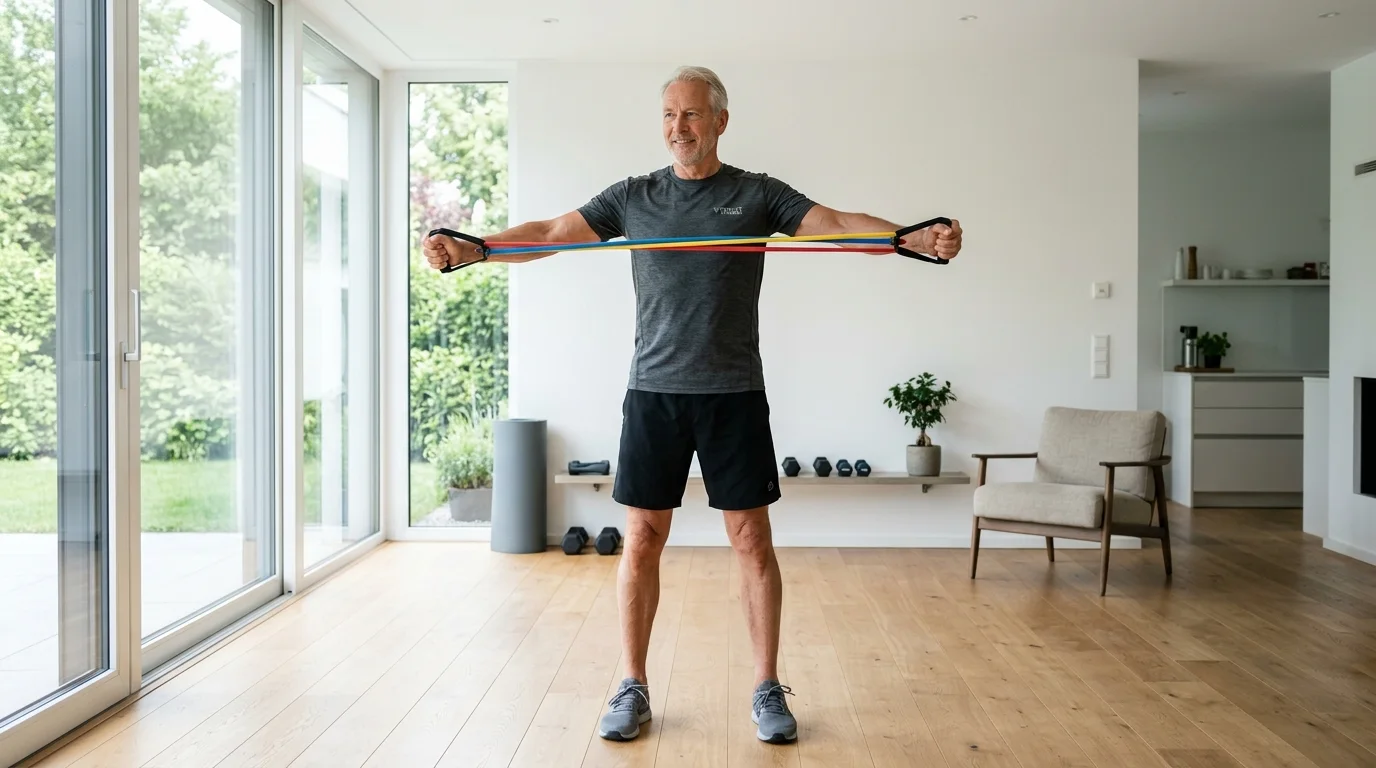
Exercise 6: Resistance Band Row
This exercise strengthens the upper back.
Steps
- Secure a resistance band.
- Pull the handles toward your body.
- Squeeze your shoulder blades gently.
- Return slowly.
Repetitions
10–12 repetitions
Good posture often improves when the back becomes stronger.
Exercise 7: Standing Leg Lifts
A simple exercise for the hips and legs.
Steps
- Stand beside a chair.
- Lift one leg slightly to the side.
- Lower slowly.
- Repeat.
Repetitions
10–12 per side
This exercise also challenges balance.
Exercise 8: Bicep Curls
One of the easiest beginner strength exercises.
Steps
- Hold light dumbbells.
- Bend your elbows.
- Lift the weights.
- Lower slowly.
Repetitions
10–12 repetitions
Even light weights can feel challenging when performed correctly.
My Simple Beginner Strength Routine
This is the routine I followed when starting.
Warm-Up (5 Minutes)
- Easy walking
- Shoulder rolls
- Gentle stretching
Main Workout
Chair Squats – 10 reps
Wall Push-Ups – 10 reps
Seated Knee Extensions – 10 reps each leg
Calf Raises – 12 reps
Dumbbell Press – 10 reps
Resistance Band Rows – 10 reps
Standing Leg Lifts – 10 reps each side
Bicep Curls – 10 reps
Cool Down
- Gentle stretching
- Deep breathing
- Light walking
The entire workout takes about 20–30 minutes.
Unexpected Benefits I Noticed
Most people begin strength training hoping to feel stronger.
That happened.
But I noticed other benefits too.
Better Balance
Everyday movement felt steadier.
Improved Confidence
I trusted my body more.
Easier Daily Tasks
Carrying groceries became less tiring.
Better Posture
I naturally stood taller.
More Energy
I felt more capable throughout the day.
These improvements often appeared before visible physical changes.
Common Mistakes to Avoid
Doing Too Much Too Soon
This was my biggest mistake.
Start slowly.
Skipping Recovery Days
Muscles need time to recover and adapt.
Using Poor Form
Quality always beats quantity.
Comparing Yourself to Others
Focus on your own progress.
Quitting Too Early
Strength improvements often take several weeks to become noticeable.
Consistency matters.
How Long Before You Notice Results?
Everyone progresses differently.
Many beginners notice improvements in:
- Strength
- Balance
- Energy
- Daily movement
Within a few weeks of consistent training.
Visible muscle changes usually take longer.
The key is patience.
Final Thoughts
Strength training after 50 doesn’t require heavy weights, expensive gyms, or complicated workout programs.A few simple exercises performed consistently can help you stay strong, active, and independent for years to come.
Start with what feels manageable.
Use a chair if needed.
Choose light resistance.
Focus on good movement rather than perfection.
The goal isn’t to lift the heaviest weight in the room.
The goal is to make everyday life easier, safer, and more enjoyable.
And from personal experience, a little strength training can go a surprisingly long way.